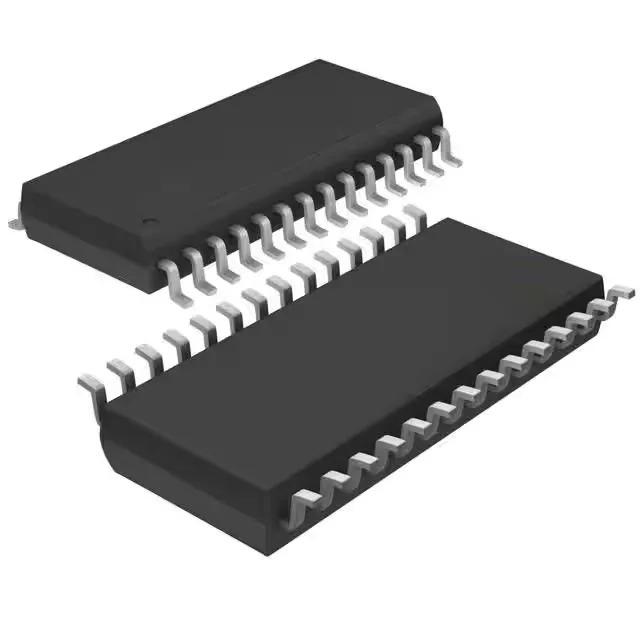
FRAM-based 16-bit MCU for low-power sensing and control
Its program memory uses FRAM — a non-volatile technology that writes at near-SRAM speed, supports 10^15 write cycles, and consumes negligible standby power. This makes it a strong fit for battery-operated sensors, data-logging instruments, and industrial control nodes where frequent field updates or high write endurance matter.
The 8 MHz clock limits the execution rate to roughly 8 MIPS. That is enough for polling a 10-bit ADC at tens of kilohertz, running a PID loop on a motor driver, or handling a UART data stream at 115200 baud. It is not a part for heavy DSP or graphics — the strength is deterministic, low-latency control with minimal energy per instruction.
FRAM memory: no wear-leveling needed
With 8 KB of FRAM for code and data, plus 1 KB of SRAM, the MSP430FR5724IPW eliminates the erase-before-write penalty of Flash. You can treat the FRAM like EEPROM — write single bytes at any time, no sector erase, no wear-leveling software. The 10^15 cycle endurance means the memory will outlast the product. This is the key differentiator versus a comparably priced Flash MCU.