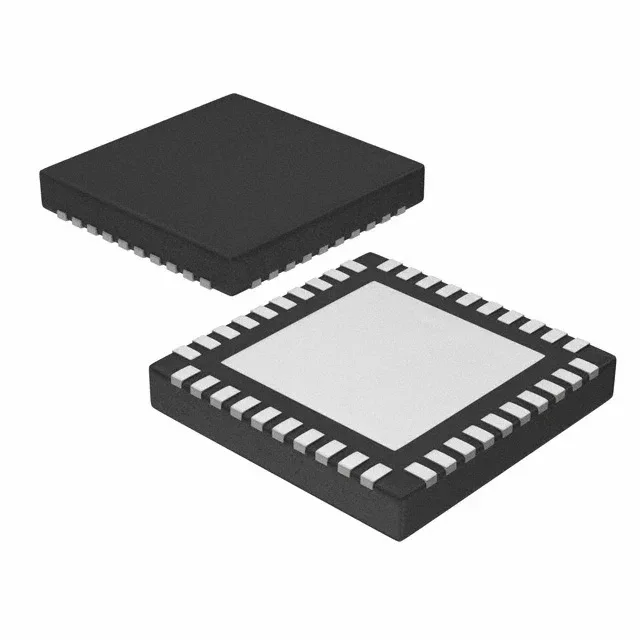
FRAM-based 16-bit MCU for low-power control
The device also carries 1K x 8 of SRAM for data scratchpad. This combination targets applications where frequent data logging, low-power duty cycling, or field firmware updates are needed, such as sensor nodes, portable instruments, and industrial controllers.
4 KB FRAM — what it means for firmware and data storage
With 4 KB of FRAM for program memory, the MSP430FR5721IRHAR sits at the entry-density end of the FRAM series. That is enough for small control loops, state machines, and communication protocol stacks for I²C, SPI, or UART links. The FRAM writes at bus speed without the erase-before-write penalty of Flash — useful for designs that update calibration constants or configuration tables on the fly. The 1K x 8 SRAM provides the working memory for stack and variables; if your application needs larger buffers, step up the FRAM density variant in the same pin-compatible family.
If your design lives under the hood or in a downhole tool, you will need the extended-temperature variants in the family.
For BOM planning, that means standard lead times through distribution and no urgency to stockpile or qualify a second source. If you are designing this into a new product, the supply outlook is stable.
Peripherals and I/O — what is on the 40-VQFN
The MCU brings out 32 I/O pins from the 40-VQFN package (6x6 mm, exposed pad). On-chip peripherals include a 14-channel 10-bit ADC, brown-out reset and power-on reset, PWM timers, and a watchdog timer.