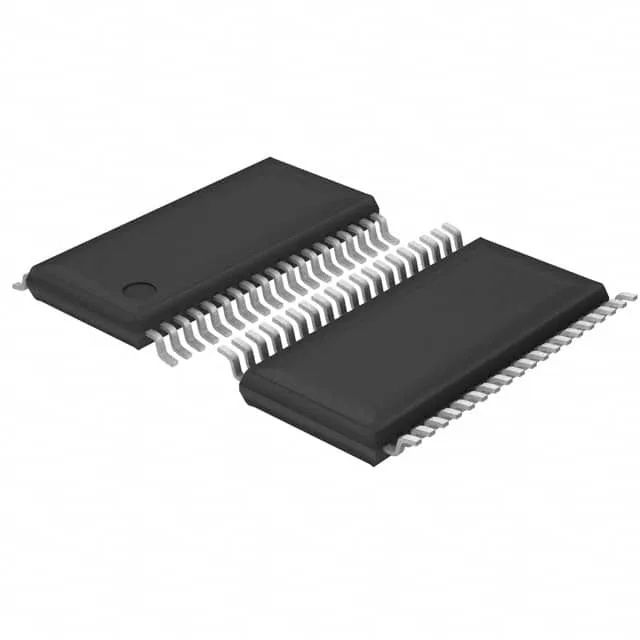
FRAM-based 16-bit MCU for low-power control
This makes it a strong fit for applications that log data, update firmware in the field, or need to retain state across power cycles without an external EEPROM.
FRAM vs Flash — what it changes for the BOM
This simplifies the memory map and reduces the component count on the board. The trade-off is that FRAM density typically tops out lower than Flash — the MSP430FR5721IDA offers 4 KB, which constrains the firmware footprint compared to a Flash MCU with 16 KB or 32 KB. For applications that fit within that limit, the FRAM approach saves a serial memory device and its associated PCB area.
Package and thermal considerations for layout
The device is supplied in a 38-pin TSSOP package (6.10 mm body width) with a 0.5 mm pitch. It is a surface-mount part intended for reflow soldering. The package does not have an exposed thermal pad, so heat dissipation relies on the leadframe and PCB copper. Decoupling with a 0.1 µF ceramic capacitor per supply pin pair is sufficient for this speed grade.