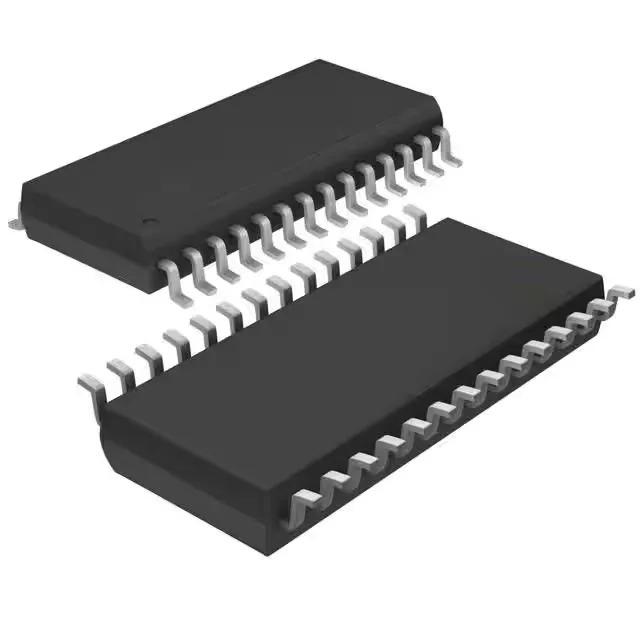
The Texas Instruments MSP430FR5720IPWR is a 16-bit microcontroller built around the MSP430 CPUXV2 core, clocked at 8 MHz. It carries 4 KB of FRAM program memory and 1 KB of SRAM, with a 10-bit ADC sampling eight channels. The part operates from 2.0 V to 3.6 V across the industrial temperature range of -40°C to 85°C, housed in a 28-pin TSSOP package. Typical applications include sensor nodes, metering, and low-power control loops where FRAM's fast write endurance and non-volatility simplify data logging and firmware updates.
FRAM program memory — why it matters for the BOM
The 4 KB FRAM replaces conventional Flash or EEPROM for code and small data sets. For a design that logs or recalibrates frequently, this eliminates the write-cycle budget concern that Flash-based MCUs impose.
The MSP430FR5720IPWR carries an EOL lifecycle stage, meaning Texas Instruments has discontinued this specific variant.
Peripherals and I/O allocation
The device provides 21 general-purpose I/O pins, plus dedicated pins for I²C, SPI, UART, LINbus, and IrDA. The 10-bit ADC with eight channels covers analog inputs for temperature, current, or voltage sensing. Brown-out reset and power-on reset are integrated, so external supervisor ICs are not needed. The 28-pin TSSOP footprint suits space-constrained PCBs where a 32-pin QFN would be overkill.