FRAM MCU for sensing and metering — what makes it different
The 12K x 8 RAM gives it room for buffered ADC samples or protocol stacks without spilling to FRAM.
44 I/O and 9x12b ADC — peripheral mix for sensor-heavy designs
With 44 I/O lines and a 9-channel 12-bit SAR ADC, this part can handle a sensor array plus a display or keypad without needing an external mux or GPIO expander. The connectivity set — IrDA, SCI, SPI, UART/USART — covers the common serial links for modems, RF modules, and wired interfaces. Brown-out detect and POR are integrated, so you can skip the external supervisor on cost-sensitive boards.
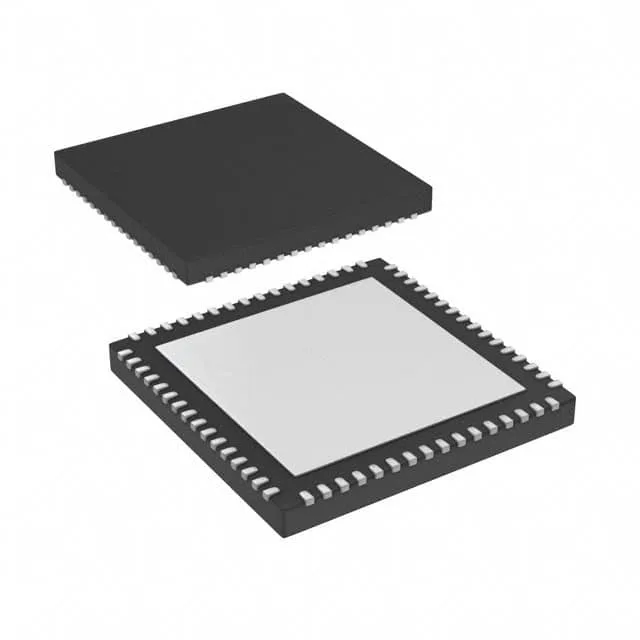
64-VQFN package — what the layout engineer needs to know
The 0.5 mm pitch calls for a fine-pitch stencil and careful solder paste volume; it is not a hand-solder part for field repair, but a rework station with hot air can swap it if the board has a thermal relief pattern.
Supply range and power profile
The FRAM's near-zero standby power means the MCU can sit in a low-power mode drawing microamps while retaining all program and data — no need to shadow FRAM to RAM on wake. This is the part you pick when the battery has to last years, not months.