What the FRAM buys you on this 16-bit MCU
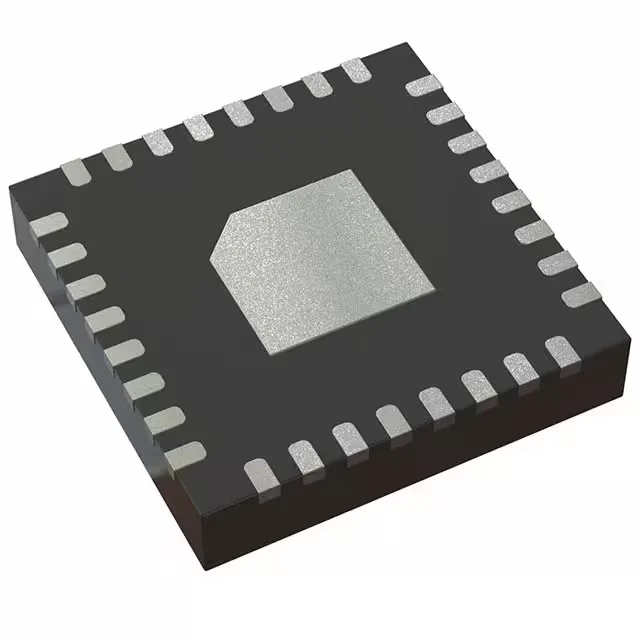
That means you can treat it as unified memory for code and data, update firmware in the field without managing sector erase, and log sensor readings directly to non-volatile space without wear-leveling overhead. The 8 KB of SRAM handles stack and scratchpad. The 32-VFQFN package with exposed pad (5x5 mm) keeps board area tight.
The 27 I/O lines and integrated peripherals (brown-out detect, POR, PWM, WDT) reduce external supervisory ICs.
ADC and analog integration
An 8-channel 12-bit SAR ADC is on-chip, sampling at rates typical of the MSP430 FRAM family. For designs reading multiple analog sensors — temperature, pressure, current sense — this eliminates an external ADC and its reference. The 12-bit resolution is adequate for most industrial and instrumentation loops; if you need 16-bit, you'd step up to the MSP430FR6xxx with a higher-resolution ADC.
No LTB risk to budget for.