3.75 KB FRAM — no wear-leveling needed for most logs
FRAM endurance is orders of magnitude beyond EEPROM or Flash — 10^15 write cycles typical. For a 3.75 KB program space, that means you can treat the FRAM as unified memory: code, constant tables, and a small data-logging buffer all live in the same address space without sector-erase delays or wear-leveling schemes. The 1 KB RAM handles stack and temporary variables; the split means a firmware engineer needs to budget carefully for interrupt nesting and buffer sizes, but the FRAM write speed (comparable to SRAM) eliminates the store-to-Flash latency that complicates real-time logging.
Industrial temp range and wide supply — one rail for the sensor node
The industrial temperature grade covers outdoor telecom cabinets, engine-bay-adjacent sensors, and factory-floor controllers.
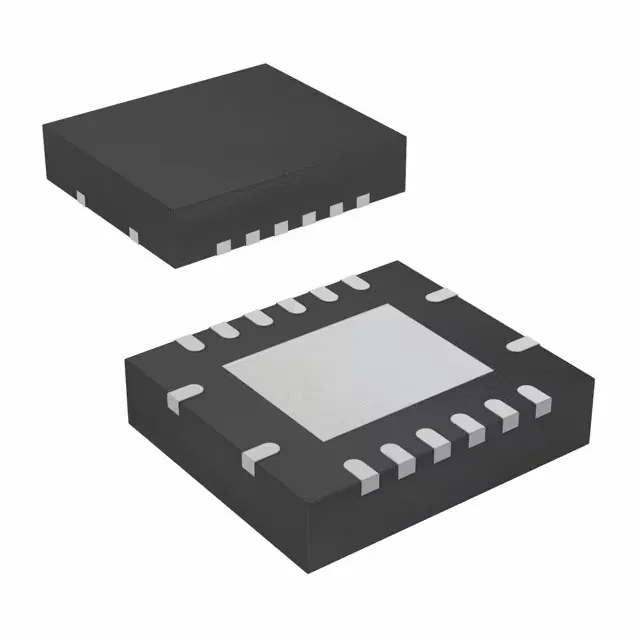
16-VFQFN with exposed pad — layout checklist
Without that via stitch, the junction temperature rises faster under continuous load — the pad is the primary heat path. The 12 I/O pins are all on the periphery; no centre pins to route.
For a BOM line, this is a green light for new product introduction without planning a second-source qualification window.