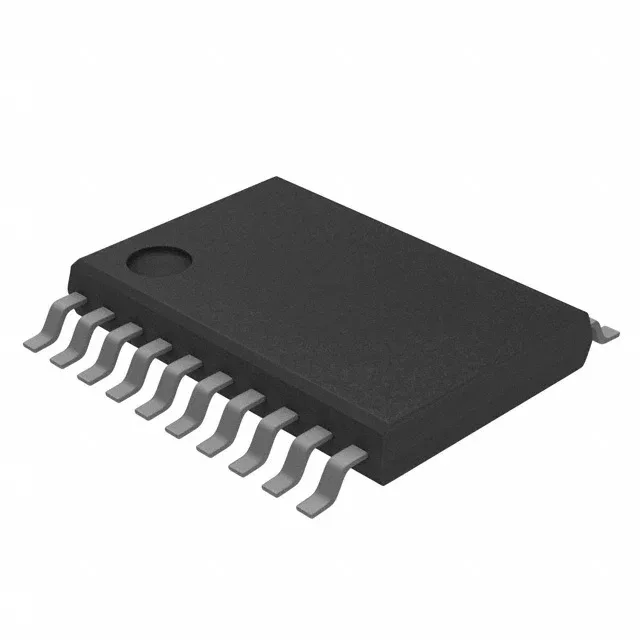
16 MHz MSP430 FRAM MCU in a 20-pin TSSOP
It belongs to the MSP430 FRAM family, where program memory is 3.75 KB of ferroelectric RAM (FRAM) — non-volatile, fast to write, and tolerant of many more write cycles than Flash. On-chip SRAM is 1 KB.
FRAM vs Flash: what the memory choice means
The 3.75 KB FRAM program memory is the standout feature. Unlike Flash, FRAM writes at bus speed without needing a pre-erase cycle, and it endures orders of magnitude more write cycles — typically 10^15 vs 10^4–10^5 for Flash. For a firmware engineer, this means you can treat the program space almost like RAM: update calibration tables, log fault codes, or store configuration data directly in the same memory array without wear-leveling or sector-erase delays. The trade-off is density: 3.75 KB is tight for complex applications, so this part targets single-function control loops or simple sensor nodes rather than feature-rich firmware.
The base part number MSP430FR2311 shares the same active status across its package variants.
The 16 I/O pins include the ADC inputs and serial interface pins, so pin allocation needs to be planned early in the schematic — there is no second function mux on every pin.