16KB FRAM, 24MHz — the MSP430FR2153TDBTR in context
FRAM is the headline feature here — it combines non-volatile storage with fast write speeds and near-infinite endurance, so you can treat it like a unified memory for both code and data without worrying about wear leveling or write-cycle budgets.
FRAM vs Flash — what the memory type means for the BOM
The 16KB FRAM program memory is the differentiator versus conventional Flash MCUs in the same price tier. For a design that stores calibration constants or runtime counters in the same memory space as code, FRAM eliminates the separate EEPROM or battery-backed SRAM line item. The 2K x 8 SRAM is modest — sized for register-heavy control loops rather than buffering large data frames — so plan your stack and DMA buffers accordingly.
Package and placement — 38-TSSOP
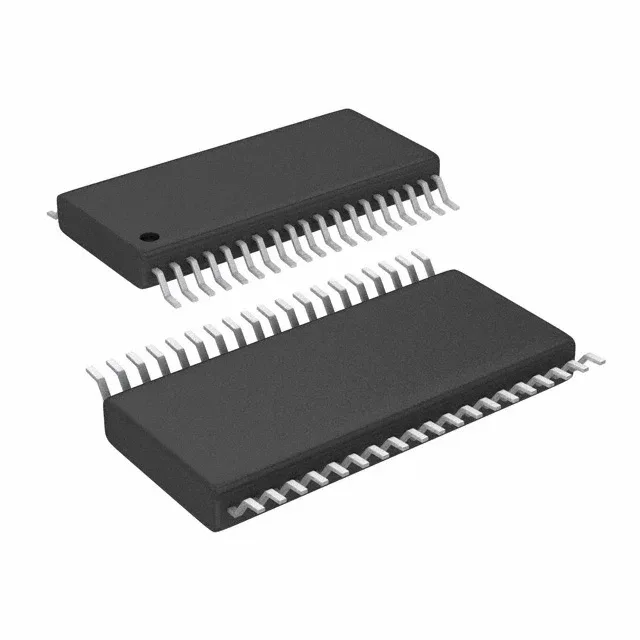
Housed in a 38-TSSOP (4.40mm width, 0.65mm pitch), this is a standard fine-pitch SSOP footprint that pick-and-place handles without trouble. The 0.65mm pitch is tight enough that solder paste volume and stencil thickness matter; a 125µm stencil with area ratio above 0.66 keeps opens rare.
The base product number MSP430FR2153 covers a family of density and package variants, so if the 38-TSSOP doesn't fit your board, a pin-compatible sibling in the same series is worth checking.