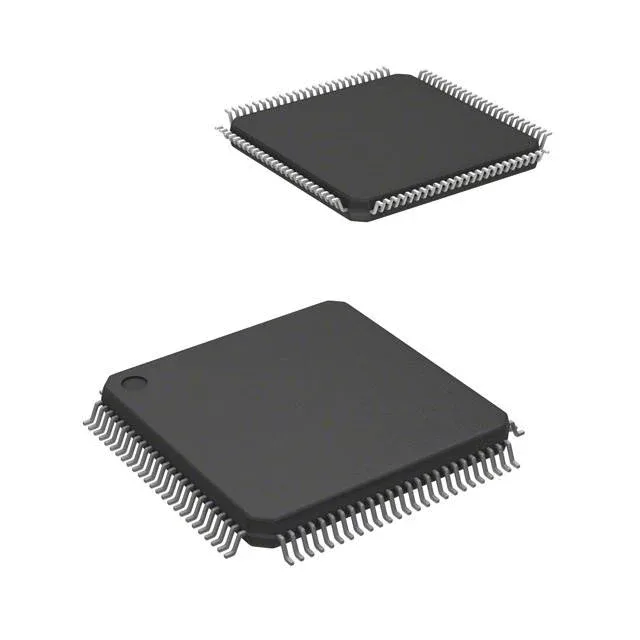
What this MCU is built for
The Texas Instruments MSP430F6779AIPZ is a 16-bit microcontroller from the MSP430F6xx series, built around the MSP430 CPUXV2 core running at 25 MHz. The standout feature is the integrated 7-channel 24-bit sigma-delta ADC, purpose-designed for polyphase energy metering, precision instrumentation, and industrial measurement applications where multiple high-resolution analog channels must be sampled simultaneously. The LCD controller drives segment displays directly, reducing external component count in panel-meter and utility-meter designs. Operating from 1.8 V to 3.6 V and rated from -40°C to 85°C, it fits outdoor and factory-floor environments without extended-temperature qualification.
The 25 MHz CPUXV2 clock supports the sigma-delta decimation rate and LCD refresh cycle. In a three-phase energy meter, the 7 ADCs run continuously; the CPU computes active/reactive power, harmonics, and RMS values between sample completions.
Integration checklist — what the peripherals demand
The 7×24-bit sigma-delta ADCs share a common voltage reference; route the analog supply and reference pins with a dedicated ground plane to keep digital switching noise out of the conversion results. The LCD controller drives up to 8-mux segments — verify the glass bias voltage and contrast control in firmware, not with external pots. The internal oscillator runs the CPU at 25 MHz, but the ADC clock can be derived from an external crystal for better accuracy; match the load capacitance to the crystal datasheet. The 62 I/O pins include the LCD segment and common lines, plus the I²C, SPI, UART, and LIN interfaces — plan the pin allocation before layout to avoid routing conflicts.