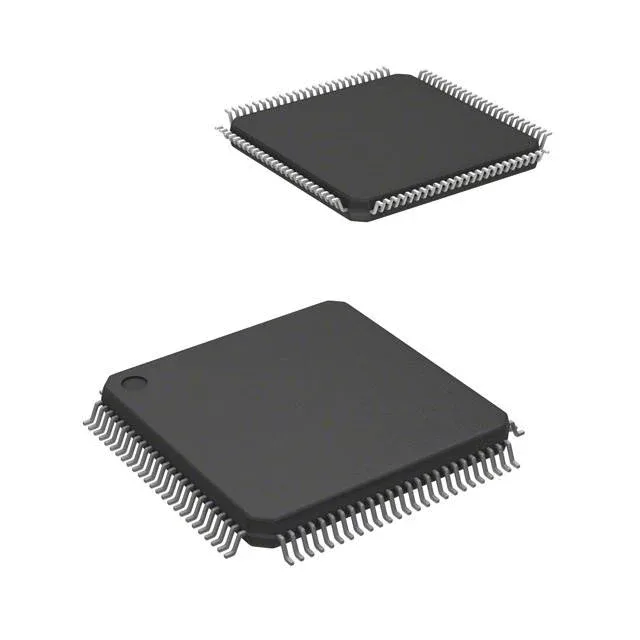
The Texas Instruments MSP430F6777IPZ is a 16-bit MCU built around the MSP430 CPUXV2 core running at 25 MHz, with 256 KB of Flash and 32 KB of RAM. Its standout feature is the seven simultaneous 24-bit sigma-delta ADCs — a dedicated analog front-end for polyphase energy metering that offloads the CPU from continuous sampling. Typical applications include smart meters, power-quality monitors, and substation data concentrators where multiple voltage and current channels must be digitised in phase lock.
25 MHz core and the sigma-delta array — what they mean for throughput
The 25 MHz clock rate on the MSP430 CPUXV2 is modest by 32-bit standards, but it is deliberately sized for the metrology workload: the seven 24-bit sigma-delta converters run independently, accumulating samples into the 32 KB RAM without core intervention. The CPU handles the calculation of RMS, active/reactive power, and harmonic analysis between conversion windows. For designs that need more headroom, the MSP430F6xx family includes 32-bit ARM Cortex-M4F alternatives, but those come with higher power draw and a different toolchain — the MSP430F6777IPZ keeps the bill-of-materials lean for a dedicated metering ASIC replacement.
The 100-LQFP (14x14 mm) footprint is a standard surface-mount package.