20 MHz 16-bit MCU with USB and mixed-signal peripherals
On-chip peripherals include a 16-channel 12-bit ADC and dual 12-bit DACs, which cover most sensor acquisition and analog output needs in a single chip — saving board space and BOM cost versus external converters. Internal oscillator keeps the clock tree self-contained for many applications.
Obsolete — sourcing through independent distribution
The MSP430F5636IZQWT is officially marked Obsolete by Texas Instruments. No factory orders or last-time-buy windows remain open. The only supply path is the surplus and broker channel, where stock is finite and non-replenishable. For a BOM line that depends on this exact code, the procurement strategy is straightforward: locate available inventory now, qualify it against the original TI datasheet, and plan for a one-time buy that covers the remaining production run. There is no official TI successor listed for this specific variant, so a redesign to a current MSP430 or a different family is the long-term fix.
Package and footprint — 113-BGA Microstar Junior
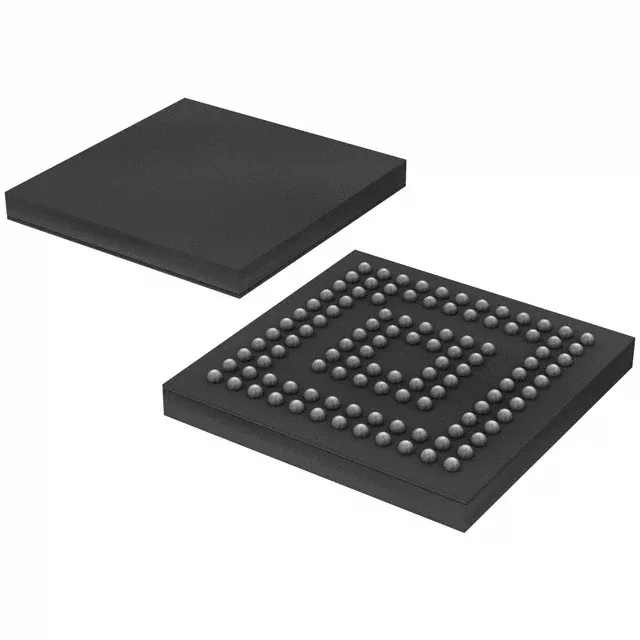
Housed in a 113-ball VFBGA package (TI's Microstar Junior, 7x7 mm ball array), the MSP430F5636IZQWT is a surface-mount device that requires a multilayer PCB with via-in-pad or microvia capability for routing the fine-pitch balls. The 74 I/O lines give ample room for parallel buses, keypad matrices, and sensor arrays without a port expander.
What the 20 MHz and 128 KB Flash mean for the design
The 20 MHz CPUXV2 core delivers about 20 MIPS — enough for real-time control loops, USB interrupt handling, and moderate DSP math (FIR filters, FFTs up to a few hundred bins). The 128 KB Flash is sized for applications that need a USB stack, a modest RTOS, and application code, but it will fill quickly if you add a GUI library or extensive lookup tables. Plan the memory budget early.
