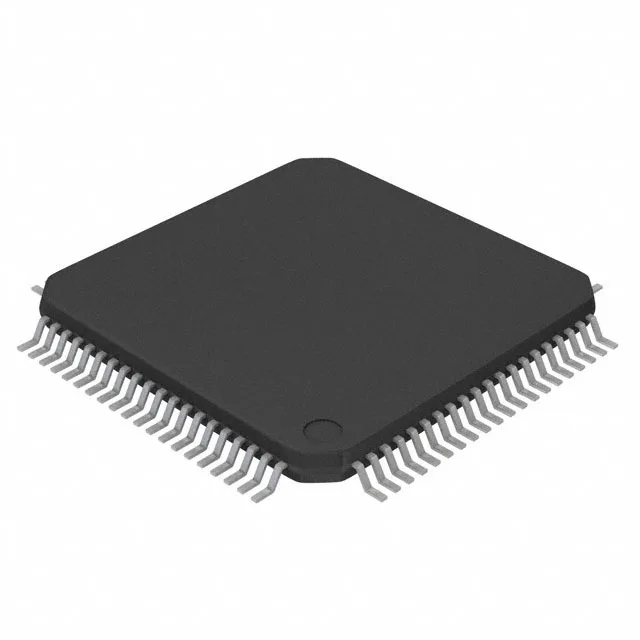
What this 16-bit MCU brings to the board
The Texas Instruments MSP430F5418IPNR is a 16-bit ultra-low-power microcontroller built around the MSP430 CPUXV2 core, clocked at 18 MHz. The 67 GPIO lines and peripheral set (I²C, SPI, UART, LINbus, IrDA) let it interface directly with sensors, actuators, and serial buses without external glue logic. Brown-out detect, POR, and a watchdog timer keep the system reliable in noisy industrial environments. Rated for -40°C to 85°C operation and supplied from 2.2 V to 3.6 V, this MCU fits into industrial control panels, outdoor telecom gear, and battery-powered instrumentation where extended temperature and low power are required.
18 MHz clock — what it means for timing closure
The 18 MHz CPU speed delivers roughly 18 MIPS on the MSP430 CPUXV2 core.
NRND status — sourcing reality for this MCU
The manufacturer has not issued a final EOL notice with a last-time-buy date, but the NRND flag signals that the clock is running — design wins should plan a migration path. For BOM lines already using this MCU, sourcing through independent distribution remains viable. We quote to order against RFQ, confirming availability and current pricing at quote time. No immediate shortage, but the NRND status means lead times may lengthen as TI shifts fab capacity to newer MSP430 families.
Peripheral integration — what connects without extra chips
The I²C, SPI, and UART interfaces handle most board-level serial communication. LINbus support ties into automotive or industrial subnets; IrDA is available for wireless optical links in clean environments. The 16-channel 12-bit ADC reads analog sensors directly — no external ADC needed.