Ultra-low-power signal conditioning for always-on sensors
Each channel draws 480 nA typical, making this part suitable for battery-powered sensor interfaces, wearable health monitors, and industrial loop-powered transmitters where every microamp is budgeted. Gain-bandwidth product is 8 kHz, which limits the part to DC and sub-audio signals — think thermocouple amplification, photodiode current sensing, or battery voltage monitoring, not audio or motor-control loops.
480 nA supply — what it buys and what it costs
The 480 nA per-channel supply current is the headline figure that separates this part from general-purpose CMOS op-amps. A typical rail-to-rail CMOS amplifier like the OPA4374AIPWT draws 600 µA per channel — over 1200× more. That difference is the trade-off: the LPV542DNXT's 8 kHz gain-bandwidth and 0.0037 V/µs slew rate mean it cannot track fast signals. For a 10 Hz thermocouple output or a 1 kHz battery-voltage ripple monitor, the bandwidth is adequate. For a 100 kHz switching-regulator feedback path, it is not. The 1 mV input offset voltage is typical for a micropower CMOS stage; if sub-100 µV offset is needed, a chopper-stabilized amplifier is a better fit.
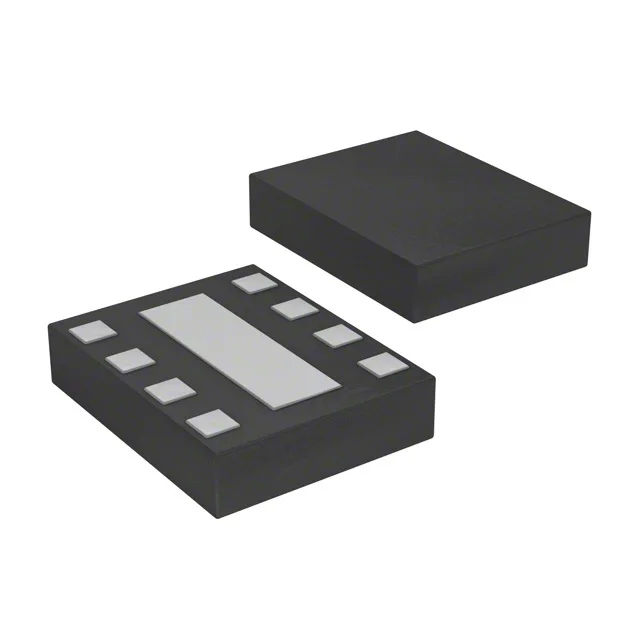
Surface-mount assembly with the pad soldered to a PCB copper plane improves heat transfer, though at 480 nA per channel self-heating is negligible. Supply voltage spans 1.6 V to 5.5 V, so a single lithium cell or a 3.3 V regulated rail both work without a secondary supply. Input bias current is 0.1 pA typical, which suits high-impedance sources like pH probes or pyroelectric sensors.
ROHS3 compliance covers the ten restricted substances including the four phthalates, so it meets current EU and global regulatory requirements for electronic equipment.