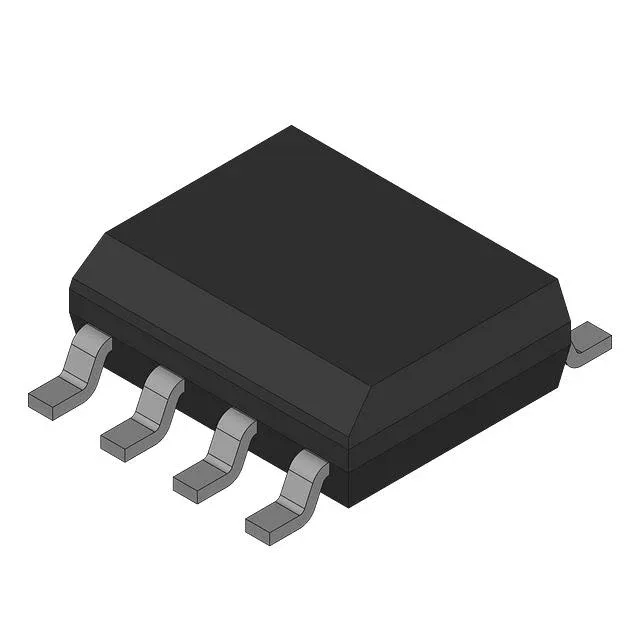
Texas Instruments LMV822M-NS — Logic ICs

LMV822M-NS Dual Op-Amp, 5.6 MHz, Rail-to-Rail, AEC-Q100

MPNLMV822M-NS
End of Life

Texas Instruments LMV822M-NS, Automotive AEC-Q100 LMV® series, dual general-purpose op-amp, 5.6 MHz GBW, 2V/µs slew rate, rail-to-rail output, 2.5V to 5.5V supply, 8-SOIC package, -40°C to 85°C.

$1.54Ref. price · indicative, final on quote
Packaging8-SOIC (0.154", 3.90mm Width)
StockContact for availability
MOQ1 pcs
  • 100% new & originalTraceable channels only — no refurbs, no pulls, no remarked parts.
  • Date & lot codes on quoteStated per line before you commit; label photos on request.
  • MSL-compliant ESD packingMoisture-sealed bags with indicator cards; reels photo-verified.
  • PayPal buyer protectionPay by T/T, PayPal or Payoneer — card payments covered end to end.

Specifications

LMV822M-NS Technical Specifications
ParameterValue
SeriesAutomotive, AEC-Q100, LMV®
Output typeRail-to-Rail
Mounting typeSurface Mount
Amplifier typeGeneral Purpose
Voltage - input offset1 mV
Voltage - supply span5.5 V
Current - supply500µA (x2 Channels)
Current - input bias40 nA
Current - output (Channel)45 mA
Operating temperature-40°C ~ 85°C
Gain bandwidth product5.6 MHz
PackageBulk
Slew rate2V/µs
Case8-SOIC (0.154\", 3.90mm Width)
Number of circuits2

Product details

Dual op-amp for 3.3V and 5V rails, AEC-Q100 qualified

Each of the two channels consumes 500 µA of supply current, making it a reasonable fit for battery-powered or thermally constrained boards where you need two op-amps in one 8-SOIC footprint.

Package and mounting

With a 5.6 MHz gain-bandwidth product, this part handles audio-band filtering, sensor signal conditioning up to a few hundred kHz, and general-purpose control loops without breaking a sweat. The 2 V/µs slew rate is enough to reproduce a 1 V peak-to-peak sine wave cleanly up to about 300 kHz — beyond that, expect some slew-induced distortion. For a dual op-amp pulling 500 µA per channel, those numbers are a solid trade-off between speed and power. If your design needs faster edge rates, you'd step up to something like a 20 V/µs part, but you'll pay in supply current.

The 2.5 V minimum supply means this op-amp works on a 3.3 V rail with margin below the dropout of a typical LDO, and the 5.5 V maximum covers 5 V ±10% systems.

Input offset and bias — what to expect for precision work

Input offset voltage is specified at 1 mV, and input bias current at 40 nA. For a general-purpose bipolar op-amp, those are typical numbers — fine for signal chains where you can tolerate a few millivolts of DC error and the source impedance is under 10 kΩ. If you need sub-millivolt offset or picoamp bias, you'd look at a CMOS-input precision amplifier, but the LMV822M-NS covers the broad middle ground without the cost premium.

For those, you'd need the extended-temperature variant in the same series.

Lifecycle and sourcing — active, RoHS non-compliant

For RoHS-required builds, verify your exemption or look at the lead-free suffix variants in the LMV822 family.

Frequently asked questions

Is LMV822M-NS AEC-Q100 qualified?

Yes, the LMV822M-NS is part of the Automotive LMV® series and is AEC-Q100 qualified, making it suitable for automotive and other high-reliability applications that require device-level qualification.

What is the equivalent or replacement for LMV822M-NS?

The LMV822M-NS is an active part with no direct replacement needed. For a functional second-source with similar dual-channel, rail-to-rail output, and general-purpose specs, the TLV9362IDDFR offers a 10.6 MHz GBW and 25 V/µs slew rate but draws higher supply current (2.6 mA per channel). The TLV9351IDCKR is a single-channel option with 3.5 MHz GBW and 20 V/µs slew rate. Neither is a pin-for-pin drop-in without checking the circuit's speed and power budget.

Can LMV822M-NS be used as a replacement for LMV822?

The LMV822M-NS is a specific ordering code within the LMV822 family. The LMV822M-NS is AEC-Q100 qualified, which the base LMV822 may not be. Verify the original part's full order code and datasheet for a drop-in match.