Its 1 MHz gain-bandwidth product and 1 V/µs slew rate place it squarely in the low-frequency signal-conditioning tier — think sensor buffering, filter stages, and DC-level shifting, not video or high-speed ADC drive.
Supply range and quiescent draw
The 130 µA supply current is low enough for battery-powered equipment — think portable instruments, IoT sensor nodes, or remote transmitters where every microamp is budgeted. The input bias current of 15 nA is typical for a bipolar-input stage; it won't be an issue with source impedances under a few hundred kilohms, but for high-impedance sensors (megaohm-range) you'd want a CMOS-input alternative.
Active and RoHS3 — no LTB clock ticking
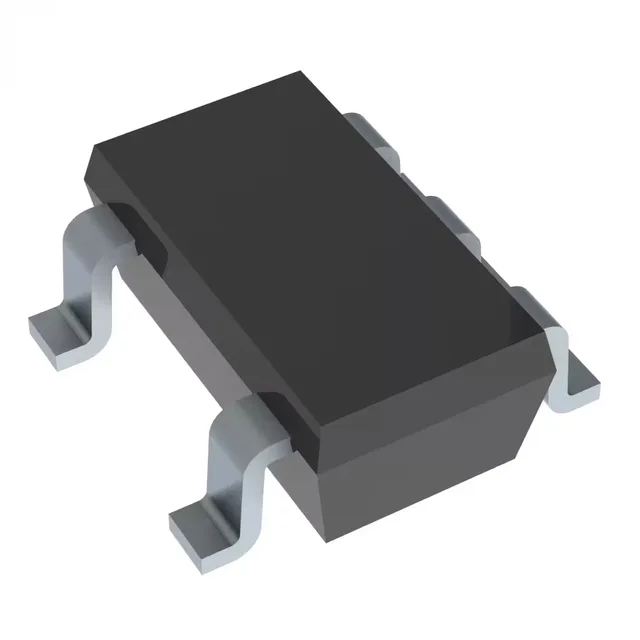
The SOT-23-5 footprint is a standard, widely second-sourced package — if you ever need a drop-in alternative, the pin-compatible TLV9351IDCKR offers a higher 3.5 MHz GBW and lower input bias, but at a slightly higher supply current.
It is not specified for 125°C junction temperatures, so avoid placing it near hot power stages or in under-hood modules without thermal analysis.