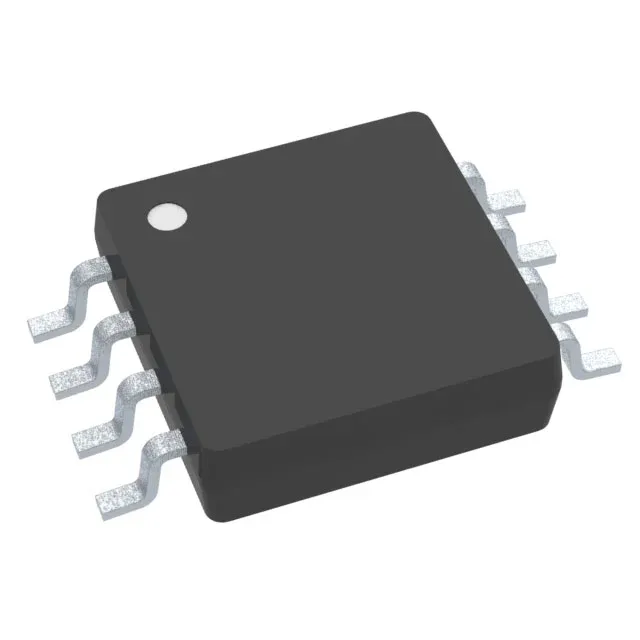
High-voltage current sense in a small MSOP-8
Input offset voltage of 80 µV and input bias current of 6.3 µA let it resolve small voltage drops across the sense resistor — a 10 mV shunt signal at 100 A gives you a usable output without a huge gain error.
That 76 V maximum supply span is the headline number that decides where this part fits. It means the LMP8481MME-H/NOPB can sense current on a 48 V telecom bus with margin, or on a 60 V industrial drive rail, without needing an external regulator or zener clamp. The 4.5 V minimum means it also works on a 5 V logic rail — but not on a 3.3 V system. If your design runs on 3.3 V or lower, you need a different current-sense amp with a lower minimum supply. The wide range also simplifies BOM consolidation: one part number covers 12 V, 24 V, and 48 V variants across a product family.
The ROHS3 compliance keeps it usable for EU and RoHS-regulated markets without an exemption hunt.
For a BOM line, you're looking at standard lead times through distribution — no premium for last-time-buy, no broker vetting needed.