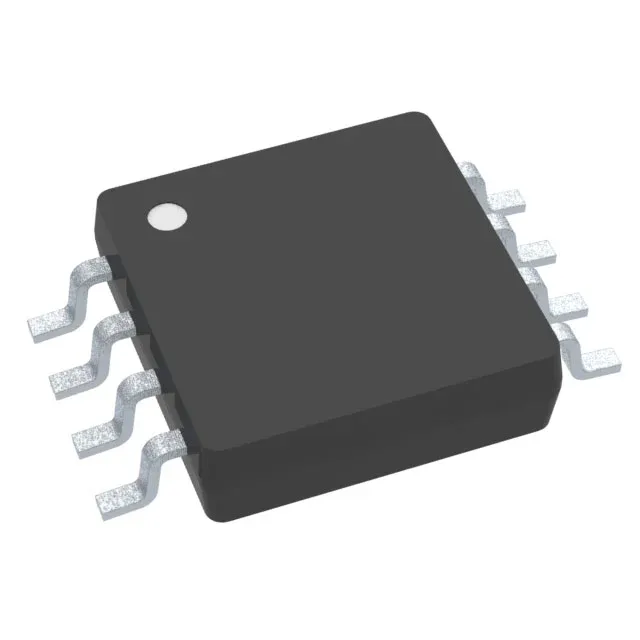
130 kHz GBW, 19 µA per channel — the low-frequency precision workhorse
Each of the two channels draws 19 µA typical supply current, yet delivers a 130 kHz gain-bandwidth product — enough for sensor signal conditioning, thermocouple amplifiers, and battery-monitoring circuits that run on a 1.6 V to 5.5 V rail. Input offset voltage is typically 10 µV, so you can skip the trim pot in most precision DC paths. The output swings rail-to-rail, which gives you the full ADC input range when running from a low supply voltage.
The 10 µV typical input offset and 0.02 pA input bias current mean you can amplify microvolt-level signals from a bridge sensor or a thermopile without the error term dominating the reading. The low bias current also lets you use high-value feedback resistors (megohm range) without introducing a significant voltage drop across them.