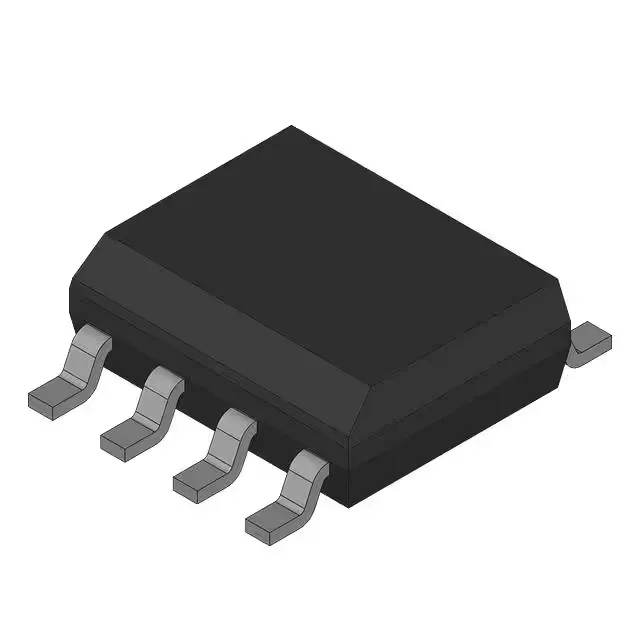
Supply span runs from 4.5 V to 12 V, so it works on a single 5 V rail or dual ±5 V supplies — but the 12 V ceiling rules out 15 V or higher industrial buses. Each channel delivers up to 120 mA output current, enough to drive a 50 Ω back-terminated line or a moderate capacitive load.
Supply rails and layout — the 12 V limit matters
The 4.5 V minimum supply means a 3.3 V-only system needs a boost converter or a separate 5 V rail — this part does not run on 3.3 V. The 12 V maximum is a hard ceiling; do not exceed it even momentarily. The 120 mA per-channel output current can drive a 50 Ω load rail-to-rail, but watch the package thermal impedance: the 8-SOIC has no exposed pad, so sustained DC current near the limit on both channels simultaneously will push the junction above 85°C ambient. For pulse or AC-coupled loads this is rarely an issue.