It delivers a 1.4 MHz gain-bandwidth product and a 1.1 V/µs slew rate — enough bandwidth for slow-to-moderate sensor conditioning, active filters below 100 kHz, and ADC driver stages that don't need high-speed settling. What sets this part apart is the input bias current: 0.002 pA typical. That's femtoamp-level leakage, making the LMC662EN a natural fit for photodiode amplifiers, pH probe buffers, and other high-impedance front-ends where a bipolar op-amp's nanoamp bias would swamp the signal. The supply range spans 4.75 V to 15.5 V, so it works across common 5 V and 12 V industrial rails without a second regulator.
Through-hole package — a rework-friendly choice
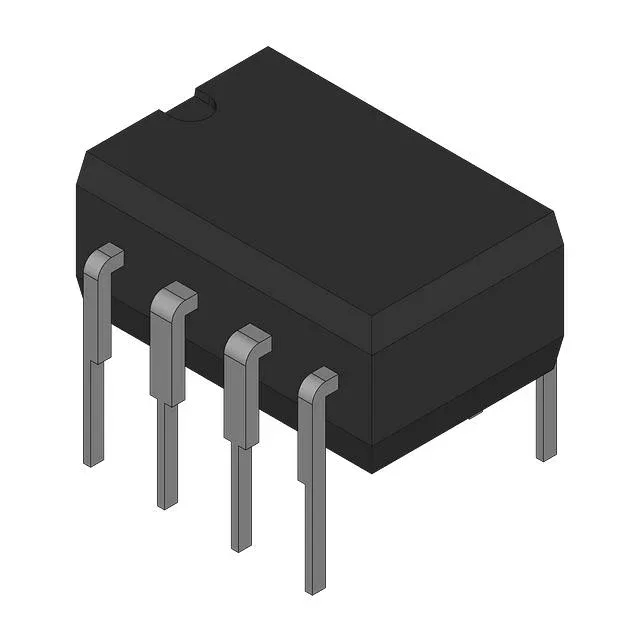
The 8-DIP (0.300" row spacing) package is a through-hole part. That means it slots into a breadboard or a socket without soldering, and if you're prototyping or repairing a legacy board, you can swap it with a standard IC puller — no hot-air station needed. The 8-MDIP supplier device package is the same mechanical outline. For a production run, the DIP footprint is larger than an SOIC, but it's easier to hand-assemble and inspect.
Temperature range and output drive
Supply current is 750 µA per amplifier (both channels combined), so it's not a micropower part but stays reasonable for multi-channel boards.
Note the RoHS compliance status: listed as RoHS non-compliant, so if your assembly requires lead-free solder, verify the exemption or look at the RoHS-compliant variant (LMC662EN/NOPB).