0.002 pA input bias — what it buys you
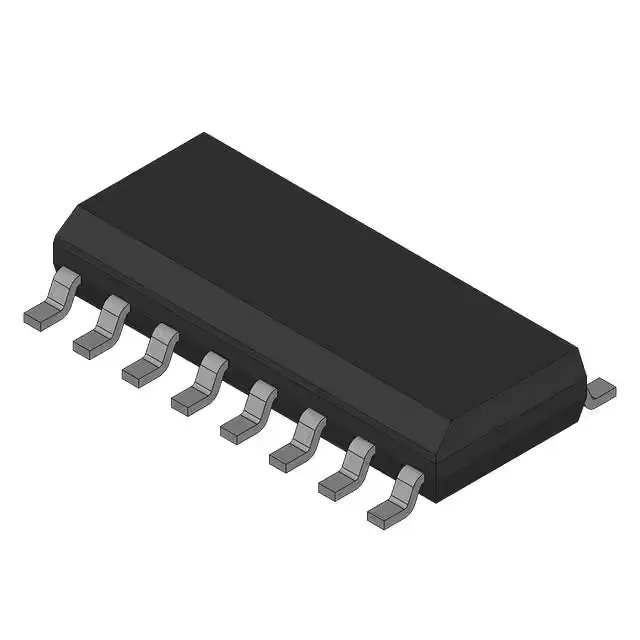
That's femtoamp territory — the kind of spec that makes a photodiode amplifier or a pH probe front end practical without a separate bias-current cancellation stage. The CMOS input stage also gives you rail-to-rail output swing, so a 5 V single-supply sensor channel can swing from near ground to within a few millivolts of the rail. Four circuits in one 14-SOIC package, each drawing 1.5 mA supply current — 6 mA total quiescent for the whole device, which matters when you're stacking eight channels on a multichannel data-acquisition board.
Supply span and temperature — where it lives
Supply range runs from 4.75 V up to 15.5 V, so it works on a single 5 V rail or split ±5 V supplies. The 14-SOIC footprint is a standard body width (3.90 mm), so layout matches the common SOIC-14 land pattern — no surprises when you drop it into an existing board.
The RoHS non-compliant flag means this variant uses lead-bearing solder finish; if your assembly line is RoHS-exempt (military, aerospace, some medical) or you have a waiver, that's fine. For RoHS-mandated production, the lead-free version (LMC660AIMX/NOPB) is the one to specify. No official second source is listed, but the quad CMOS op-amp space has alternatives — the OPA4374 from TI is a functional peer with 6.5 MHz GBW and 5 V/µs slew rate, trading some input bias (0.5 pA) for higher speed, and it comes in a similar 14-pin package.