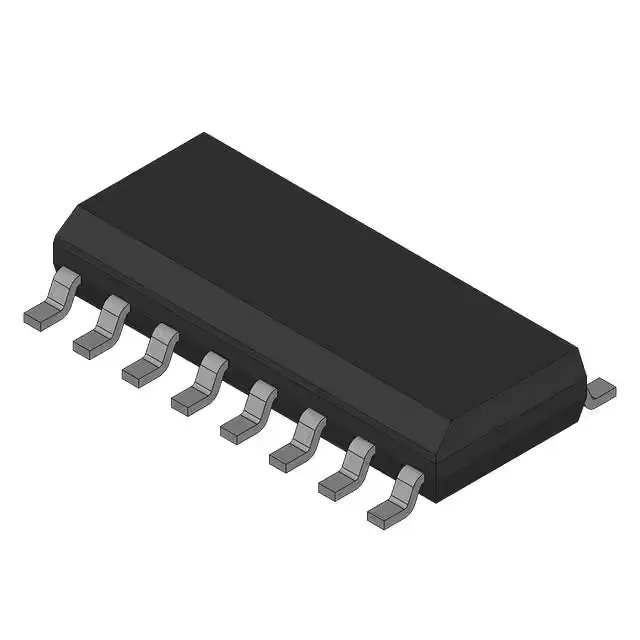
Texas Instruments LMC660AIMX — Logic ICs

LMC660AIMX CMOS Quad Op-Amp, 1.4 MHz, Rail-to-Rail Output

MPNLMC660AIMX
End of Life

Texas Instruments LMC660AIMX, LMC® series, CMOS quad operational amplifier, 1.4 MHz gain bandwidth, 1.1 V/µs slew rate, rail-to-rail output, 4.75 V to 15.5 V supply, -40°C to 85°C, 14-SOIC package.

$2.05Ref. price · indicative, final on quote
Packaging14-SOIC (0.154", 3.90mm Width)
StockContact for availability
MOQ1 pcs
  • 100% new & originalTraceable channels only — no refurbs, no pulls, no remarked parts.
  • Date & lot codes on quoteStated per line before you commit; label photos on request.
  • MSL-compliant ESD packingMoisture-sealed bags with indicator cards; reels photo-verified.
  • PayPal buyer protectionPay by T/T, PayPal or Payoneer — card payments covered end to end.

Specifications

LMC660AIMX Technical Specifications
ParameterValue
SeriesLMC®
Output typePush-Pull, Rail-to-Rail
Mounting typeSurface Mount
Amplifier typeCMOS
Voltage - input offset1 mV
Voltage - supply span15.5 V
Current - supply1.5mA (x4 Channels)
Current - input bias0.002 pA
Current - output (Channel)40 mA
Operating temperature-40°C ~ 85°C
Gain bandwidth product1.4 MHz
PackageBulk
Slew rate1.1V/µs
Case14-SOIC (0.154\", 3.90mm Width)
Number of circuits4

Product details

Quad CMOS op-amp — 1.5 mA total supply, picoamp bias

Key features include a gain bandwidth product of 1.4 MHz, a slew rate of 1.1 V/µs, and an exceptionally low input bias current of 0.002 pA — typical for CMOS input stages and critical for high-impedance sensor interfaces. The output stage is push-pull rail-to-rail, allowing the output to swing within millivolts of either supply rail in single-supply designs. Supply span ranges from 4.75 V to 15.5 V, and each channel can source or sink 40 mA.

1.5 mA quiescent for four channels — what that means on the rail

Total supply current for all four amplifiers is 1.5 mA, which works out to roughly 375 µA per channel. In a battery-powered or multi-channel data-acquisition system, that quiescent draw is low enough to keep the thermal budget comfortable in a 14-SOIC without airflow. The 40 mA per-channel output current gives enough drive for modest loads — think driving an ADC input, a reference buffer, or a small relay — but not for heavy cable or 50-ohm back-termination. If you need more output muscle, plan on a separate buffer stage.

0.002 pA input bias — the so-what for sensor front ends

The CMOS input stage delivers a typical input bias current of 0.002 pA. That is essentially negligible for most practical circuits — a photodiode amplifier, pH probe buffer, or electrometer front end will see virtually no offset from bias current. The input offset voltage is 1 mV, which is decent for a general-purpose CMOS op-amp but not precision-grade; if you need sub-100 µV offset, you will want an auto-zero or chopper-stabilized part. The combination of picoamp bias and rail-to-rail output makes the LMC660AIMX a natural fit for single-supply sensor conditioning where the signal is small and the supply is 5 V or 3.3 V.

Frequently asked questions

Is LMC660AIMX rail-to-rail output?

Yes — the output type is push-pull, rail-to-rail. The output can swing within millivolts of the positive and negative supply rails, which is useful in single-supply designs where headroom is tight.