Single general-purpose op-amp with a 0.8 V/µs slew rate
The 160 µA supply current keeps the power budget lean for always-on monitoring loops or battery-powered instruments where every microamp counts.
It is not qualified for automotive under-hood, outdoor telecom cabinets, or factory-floor environments where the ambient regularly exceeds 70°C or drops below freezing. If your BOM calls for industrial or extended temperature, the LM776CN will not hold the spec.
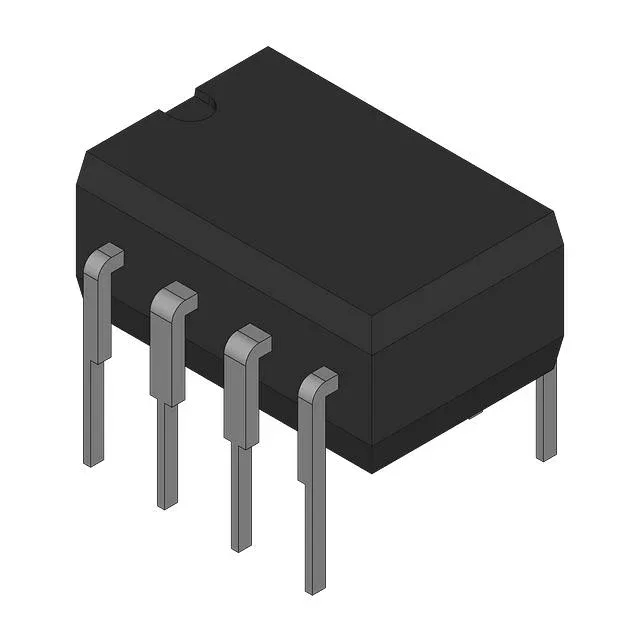
Through-hole 8-DIP — legacy footprint, easy to breadboard
The 8-DIP (0.300", 7.62mm) body with through-hole leads is a breadboard-friendly, hand-solderable package. It suits prototyping, rework, and low-volume production where wave soldering is the norm. For a new high-density surface-mount design, this is not the package you reach for — but if you are retrofitting an older PCB or need a drop-in replacement for a DIP-8 socket, the footprint matches the classic 741/358 layout.
The 15 nA input bias current is bipolar-era — fine for low-impedance sources (below 10 kΩ), but a high-impedance sensor (e.g., a pH probe) will see a significant voltage error from bias current flowing through the source resistance. If your source impedance is above 100 kΩ, consider a FET-input op-amp instead.
The RoHS compliance is marked as non-compliant, so verify your assembly line's exemption allowance if you are running lead-free processes.