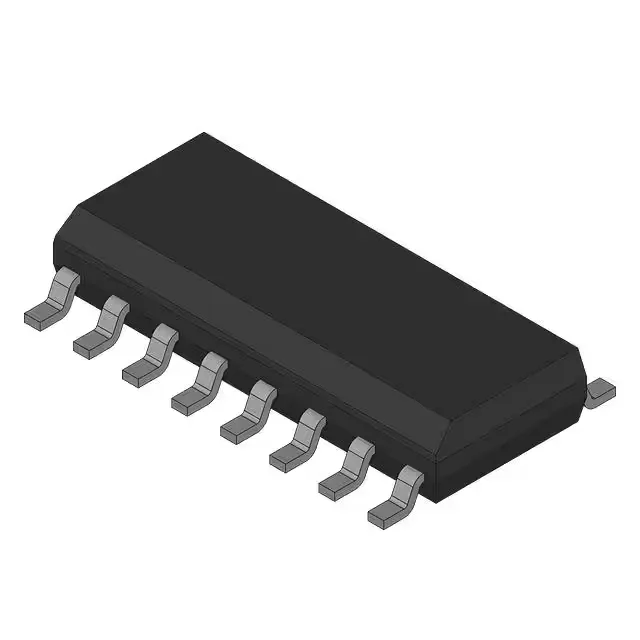
The LM7372IMA-TI is a dual voltage-feedback op-amp from Texas Instruments built for applications that need to swing large signals at high speed. Its 3000 V/µs slew rate means it can reproduce a 10 V peak-to-peak pulse with rise times under 4 ns — essential for video distribution, radar pulse conditioning, and high-speed ADC drivers where signal fidelity at the edge matters more than DC precision. The 220 MHz -3dB bandwidth supports wideband gain stages up to about 20 MHz closed-loop before gain peaking becomes a layout concern. Each of the two amplifiers delivers 260 mA of output current, enough to drive 50 Ω cables directly or charge the sampling capacitor of a high-speed ADC without an external buffer. The 13 mA supply current per channel is moderate for this speed class — thermal rise in the SOIC-16 package stays manageable at room temperature, but at 85°C ambient and both channels running near full swing, airflow or a slight derating on output current keeps the junction inside the safe operating area.
Supply range and single-supply flexibility
The LM7372IMA-TI operates from a total supply span of 9 V to 36 V, which covers the common ±5 V, ±12 V, and ±15 V split rails as well as single-supply configurations like 12 V or 24 V industrial buses. At 9 V minimum, it can run from a 12 V rail with margin. The input common-mode range extends to within about 1.5 V of each rail — not a true rail-to-rail input, so for single-supply low-side sensing the input signal needs to stay above the negative rail by a couple of volts.
Package and rework — SOIC-16 is bench-friendly
Housed in a standard 16-SOIC (3.90 mm body width), this part is hand-reworkable with hot air.
RoHS non-compliant per the listing, so verify your assembly line's exemption allowance if you need lead-free processing.