Texas Instruments LM5176RHFT — Analog & Data Acquisition

TI LM5176RHFT Buck-Boost Controller, 4.2V–55V, 100kHz–600kHz

MPNLM5176RHFT
End of Life

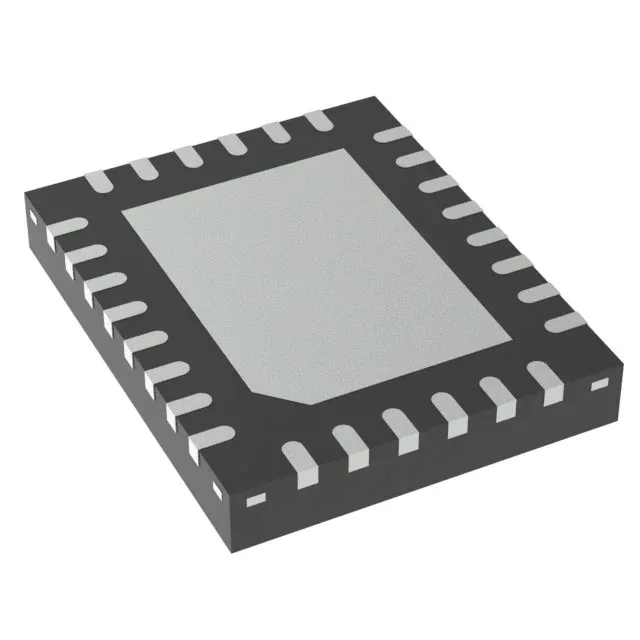
Texas Instruments LM5176RHFT synchronous buck-boost controller, 4.2V to 55V supply, single-output transistor driver, 100kHz to 600kHz switching frequency, 28-VFQFN Exposed Pad (5x4 mm), -40°C to 125°C junction temperature.

$8.79Ref. price · indicative, final on quote
Packaging28-VFQFN Exposed Pad
StockContact for availability
MOQ1 pcs
  • 100% new & originalTraceable channels only — no refurbs, no pulls, no remarked parts.
  • Date & lot codes on quoteStated per line before you commit; label photos on request.
  • MSL-compliant ESD packingMoisture-sealed bags with indicator cards; reels photo-verified.
  • PayPal buyer protectionPay by T/T, PayPal or Payoneer — card payments covered end to end.

Specifications

LM5176RHFT Technical Specifications
ParameterValue
Output typeTransistor Driver
Mounting typeSurface Mount
Voltage - supply (Vcc (Vdd))4.2V ~ 55V
Frequency100kHz ~ 600kHz
Number of outputs1
Output phases1
Duty cycle50%
Operating temperature-40°C ~ 125°C (TJ)
PackageTape & Reel (TR); Cut Tape (CT)
FunctionStep-Up/Step-Down
TopologyBuck-Boost
Clock syncYes
Case28-VFQFN Exposed Pad
Control featuresCurrent Limit, Enable, Frequency Control, Power Good, Soft Start
Output configurationPositive
Synchronous rectifierYes

Product details

Synchronous buck-boost controller for wide-input-rail designs

The Texas Instruments LM5176RHFT is a synchronous buck-boost switching regulator controller that regulates a positive output voltage from an input that can be above, below, or equal to the output. Its 4.2 V to 55 V supply range covers 12 V and 24 V industrial buses, automotive battery rails through cold-crank and load-dump, and multi-cell Li-ion battery packs without a cascaded pre-regulator. The controller drives an external transistor pair in a single-inductor, four-switch buck-boost topology with synchronous rectification, which maintains efficiency when the input voltage crosses the output regulation point. Switching frequency is programmable from 100 kHz to 600 kHz and includes a clock sync input for system-level EMI management. Control features on the 28-VFQFN (5x4 mm) package include current limit, enable, frequency control, power-good flag, and a programmable soft start. The junction temperature range of -40°C to 125°C qualifies it for under-hood automotive, outdoor telecom, and industrial motor-drive environments.

Wide input range — what the 4.2 V to 55 V supply means for your rail budget

The 4.2 V minimum supply means this part regulates through the bottom of a 5 V rail during brownout and can run directly from a 4-cell Li-ion battery near its discharge floor. The 55 V maximum covers 24 V industrial rails with 20% tolerance plus transient spikes, and handles automotive 12 V system load-dump events without an external clamp. A buck-boost topology is the right choice when the input can swing both below and above the target output — a simple buck or boost alone would lose regulation at one end of the range.

Active production — no LTB risk on this BOM line

The LM5176RHFT carries an Active product status, meaning Texas Instruments continues to manufacture and support the part for new designs. There is no last-time-buy window to track, no NRND flag, and no forced redesign horizon for the production BOM. The part is ROHS3 compliant per the current revision.

Package and thermal — 28-VFQFN with exposed pad

The 28-VFQFN Exposed Pad package (5x4 mm body) requires a thermal via array under the pad to conduct heat into the PCB ground plane. Without that stitch, junction temperature rises quickly when the external MOSFETs switch at high duty cycles. The package is surface-mount only, supplied in Tape & Reel or Cut Tape options.

Frequently asked questions

What is the LM5176RHFT used for?

It is a synchronous buck-boost controller used to generate a regulated positive output voltage from an input that can be above, below, or equal to the output. Typical applications include automotive battery-fed rails (12 V to 3.3 V or 5 V, and 12 V to 24 V for infotainment), industrial 24 V bus converters, USB-C power delivery source adapters, and battery-powered equipment where the cell voltage crosses the output level during discharge.