80 MHz Cortex-M3 with 128 KB Flash — what it means on the bench
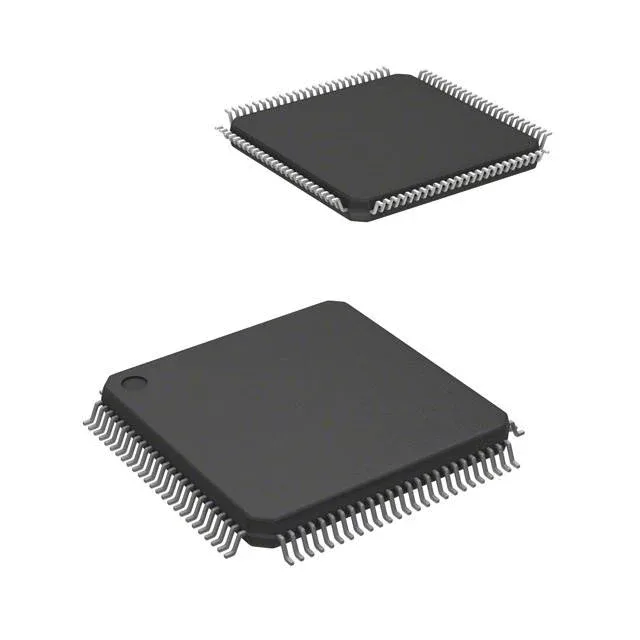
The LM3S5791-IQC80-C3: Stellaris ARM Cortex-M3 MCU clocked at 80 MHz, with 128 KB Flash and 64 KB RAM. Includes CAN, USB OTG, and 16-channel 10-bit ADC. The 100-LQFP package (14x14 mm) gives you 72 I/O and the full connectivity set: CAN, USB OTG, multiple UART/SPI/I²C, plus an external bus interface for memory or FPGA. The internal oscillator saves a crystal on the BOM if timing jitter is tolerable. Operating temperature range is -40°C to 85°C. Supply voltage is 1.08 V to 1.32 V.
Obsolete — sourcing reality and what replaces it
This part is marked obsolete. No official successor part number is listed in the lifecycle record. For a BOM line that needs this exact footprint and peripheral set, the independent channel is the only option — we source it against an RFQ from our network of surplus and authorized-overstock suppliers. For new designs, consider current Stellaris series from TI. Verify pin-compatibility and supply voltage independently.
What the 80 MHz and 128 KB Flash mean for fit
80 MHz core clock supports real-time control loops. 128 KB Flash holds a moderate application. The 64 KB RAM is generous for a Cortex-M3 of this vintage — it can hold a full USB descriptor table, a CAN message queue, and a few kilobytes of ADC buffer without paging. No external RAM needed for most sensor-fusion or gateway tasks.
Peripherals and connectivity at a glance
The peripheral set includes CAN, USB OTG, multiple UART/SPI/I²C, an external bus interface (EBI/EMI), and a quadrature encoder interface (QEI). That makes it a natural fit for a motion-control node that talks CAN to the PLC and USB to a configuration laptop. 16-channel 10-bit ADC. Ten bits suit current-sense or temperature monitoring. Brown-out detect, POR, and a watchdog timer are on-chip — no external supervisor needed for basic reset handling.
