That is enough throughput for a 4-axis stepper controller or a 10 kHz current loop, but not for video or high-speed data acquisition.
Memory sizing — Flash and RAM for the BOM
128 KB of Flash holds a moderate firmware image — a FreeRTOS kernel plus a Modbus stack and some application logic fits. The 64 KB of RAM (organized as 64K x 8) gives room for a few hundred bytes of DMA buffers and a modest heap. If the application needs a full TCP/IP stack with large packet buffers, this part will run out of RAM; it is sized for control logic and sensor fusion, not for a web server.
Lifecycle — obsolete, sourced from surplus
This part is officially obsolete per the manufacturer. There is no listed successor or second-source alternate in the evidence.
The four 10-bit ADC channels handle analog feedback from potentiometers or current shunts. The PWM and WDT are standard for motor drive and safety watchdog applications.
Package — BGA reflow, not field-swappable
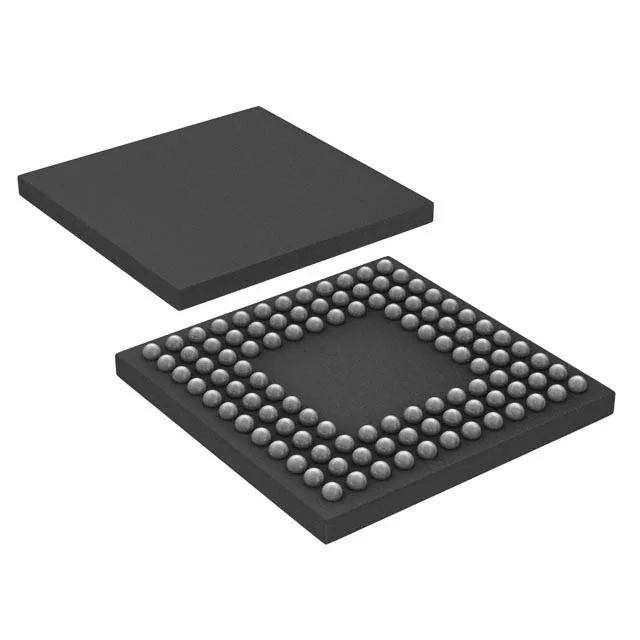
The 108-ball BGA (10x10 mm) is a fine-pitch surface-mount package. This is not a part you swap in the field with a soldering iron — it needs a reflow oven and X-ray inspection. For a field-service technician, the takeaway is: if this chip fails, the whole board comes out. Keep a spare board in the kit, not a loose IC.