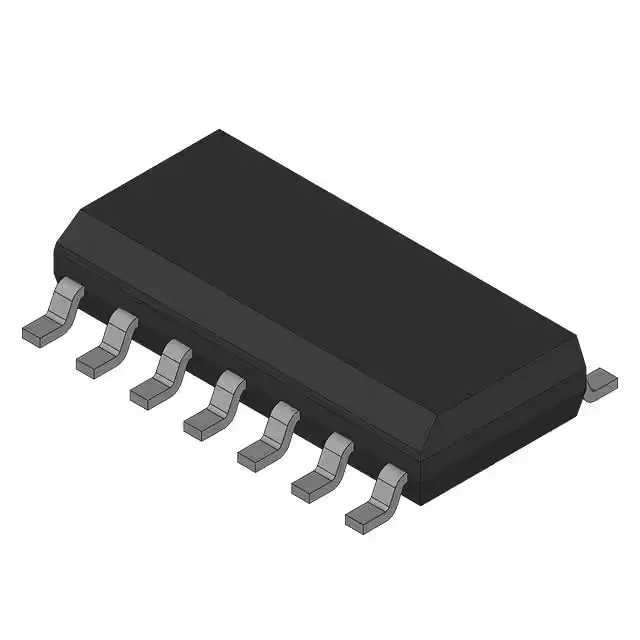
Each of the four channels can source or sink 10 mA, with a total quiescent supply current of 6.2 mA for the whole package.
A 20 V/µs slew rate means this op-amp can swing a 10 V peak-to-peak output in 500 ns. That is fast enough for audio-frequency waveforms, control-loop compensation in switch-mode supplies, and general-purpose signal conditioning where the input edges are in the tens to hundreds of kilohertz range. The 30 nA input bias current is typical of a bipolar-input stage — not a problem for low-impedance sources, but worth noting if you are buffering a high-impedance sensor.
That rules it out for new designs that must meet RoHS exemption-free requirements, but it is perfectly acceptable for repair, maintenance, and legacy-production runs where the exemption applies or the customer waives RoHS. If you are restocking a BOM for a board that already uses this part, the active status means you are not facing a last-time-buy deadline — yet. For new designs, look at a RoHS-compliant quad op-amp like the TLV9352 or similar modern CMOS alternative.