Buck controller for 5 V rails — what the specs tell the BOM engineer
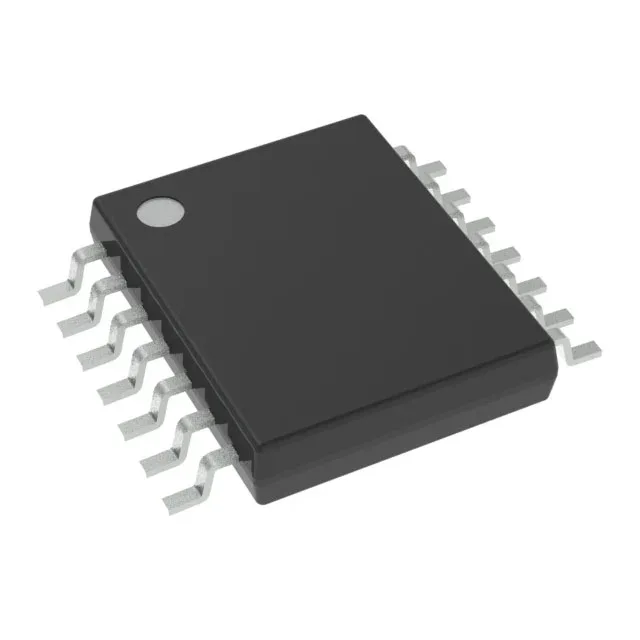
The Texas Instruments LM2737MTCX/NOPB is a current-mode step-down (buck) PWM controller designed for point-of-load regulation from a 4.5 V to 5.5 V supply rail. It drives an external N-channel MOSFET and includes a synchronous rectifier driver, eliminating the freewheeling Schottky diode typical in older designs.
Switching frequency from 50 kHz to 2 MHz — inductor sizing trade-off
The LM2737's switching frequency is programmable from 50 kHz to 2 MHz via an external resistor. At the low end, you use a larger inductor but get lower switching losses; at 2 MHz the inductor shrinks to a small footprint part, but gate-drive losses and core losses climb. For a typical 5 V to 1.8 V / 3 A rail, 300-500 kHz is a common sweet spot that balances inductor size and efficiency.
90% duty cycle and synchronous rectification
A maximum duty cycle of 90% means the output can be as high as 4.95 V from a 5.5 V input, useful for low-dropout scenarios. The built-in synchronous rectifier driver (high-side and low-side) improves efficiency by 3-5% over a diode-based design at heavy loads, and eliminates the external Schottky — saving about 2-3 cents and a diode footprint per rail.
Control features reduce external component count
Integrated control features include current limit (cycle-by-cycle), enable pin for sequencing, frequency control (via resistor), a power-good output for rail monitoring, and a soft-start pin to limit inrush. These reduce the need for external supervisory ICs and RC delay circuits, simplifying the BOM and layout.
TI lists the LM2737MTCX/NOPB as Active. The ROHS3 compliance covers EU and China regulatory requirements. For new designs, this part carries no imminent obsolescence risk, though the narrow 5 V supply range means it is a fixed-rail controller, not a wide-input part.