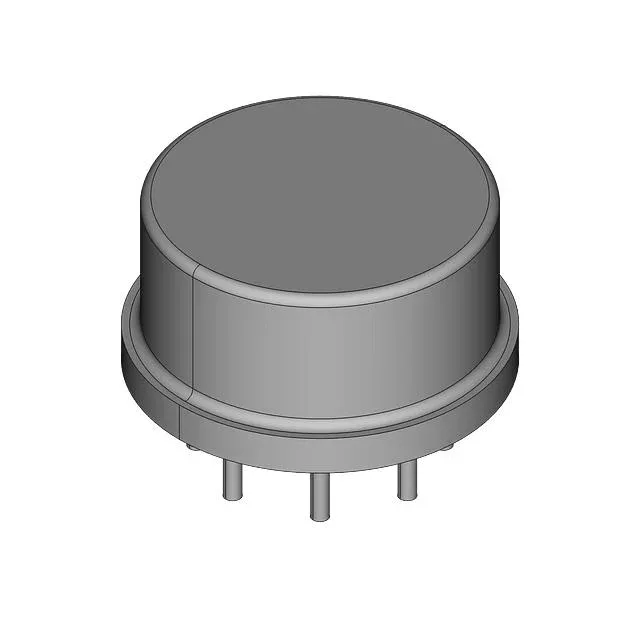
AEC-Q100 dual op-amp in a TO-99-8 can
It delivers a 1 MHz gain-bandwidth product and a 2 mV typical input offset voltage, drawing 1 mA of supply current per amplifier. Packaged in a through-hole TO-99-8 metal can, it is designed for applications requiring the mechanical and thermal robustness of a hermetic package, such as automotive engine control modules, industrial sensor interfaces, and power-train electronics where board-level conformal coating or harsh environments are a factor.
1 MHz GBW and 40 mA output — what drives the BOM decision
The 1 MHz gain-bandwidth product sets the usable frequency range for feedback loops and active filters. For a unity-gain buffer, the closed-loop bandwidth is 1 MHz; at a gain of 10, it drops to 100 kHz. This is sufficient for audio-frequency signal conditioning, motor-current sensing loops below 100 kHz, and general-purpose analog signal chains in automotive and industrial systems. The 40 mA per-channel output current capability means the LM258H can directly drive moderate loads like small relays, LEDs, or the input of a downstream ADC without a separate buffer stage — a BOM simplification when output current is a constraint.
It does not cover under-hood or engine-bay environments where -40°C to 125°C parts are required — for those, look at the LM2904 series or similar AEC-Q100 parts with extended temperature ratings.
For a procurement team, this removes the supply-risk flag that comes with NRND or obsolete parts. The active status, combined with the AEC-Q100 qualification, makes it a stable choice for automotive and industrial BOMs where long-term availability is a requirement.
Through-hole metal can — fit and rework considerations
The TO-99-8 metal can is a through-hole package with eight leads arranged in a circular pattern. It is larger than modern surface-mount SOIC-8 or MSOP-8 packages, so board area and component height must be budgeted. The metal can provides a hermetic seal, which is an advantage in high-humidity or chemically aggressive environments, and it can be soldered with standard wave or hand-soldering processes. For rework, the through-hole leads are easier to desolder than fine-pitch SMD packages, but the metal body requires careful handling to avoid thermal shock.