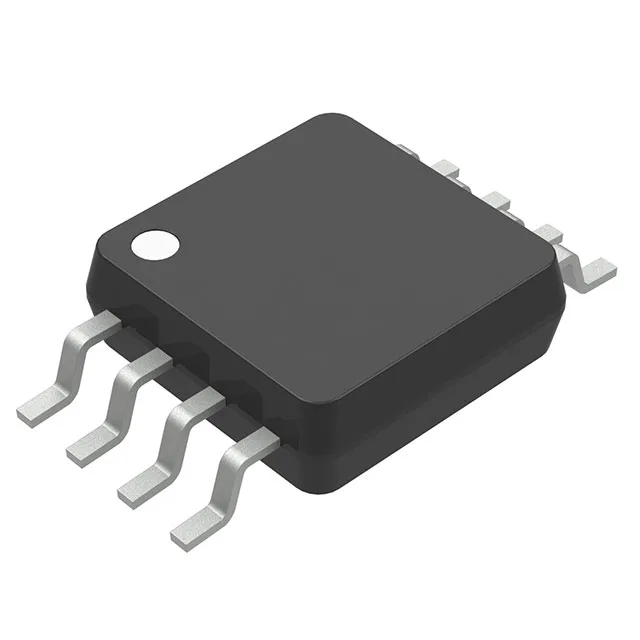
Texas Instruments LM25085AMME/NOPB — Analog & Data Acquisition

LM25085AMME/NOPB Buck Controller, 4.5V–42V Input, 1 MHz

MPNLM25085AMME/NOPB
End of Life

Texas Instruments LM25085AMME/NOPB, non-synchronous buck controller, 4.5V–42V input, up to 1 MHz switching, 8-VSSOP package, -40°C to 125°C.

$2.72Ref. price · indicative, final on quote
Packaging8-TSSOP, 8-MSOP (0.118", 3.00mm Width)
RoHSROHS3 Compliant
Independent supplier — new & surplus stockAuthenticity-screened · ESD-safe packingListing updated Aug 2026

Specifications

LM25085AMME/NOPB specifications
ParameterValue
Output typeTransistor Driver
MountingSurface Mount
Voltage - supply (Vcc (Vdd))4.5V ~ 42V
Frequency - switchingUp to 1MHz
I/O channels1
Output phases1
Duty cycle100%
Operating temperature-40°C ~ 125°C (TJ)
PackageTape & Reel (TR); Cut Tape (CT)
FunctionStep-Down
TopologyBuck
Clock syncNo
Case8-TSSOP, 8-MSOP (0.118\", 3.00mm Width)
Control featuresCurrent Limit, Frequency Control
Output configurationPositive
Synchronous rectifierNo

Product details

What this buck controller does on your rail

The Texas Instruments LM25085AMME/NOPB is a non-synchronous step-down (buck) controller that drives an external transistor — no built-in FETs, so you size the power stage to your load. It handles a 4.5V to 42V input rail and switches at up to 1 MHz, which keeps the inductor small and the transient response tight. The single-output, positive-configuration design is meant for industrial and automotive supplies where you need a regulated lower voltage from a wide, often noisy bus. The 100% duty cycle capability means it can pass the input straight through when the drop is minimal, handy for battery-backed hold-up scenarios.

Input range and switching frequency — the design decisions

The 4.5V to 42V supply range covers 12V and 24V industrial rails, plus 48V telecom with margin. If your board sees cold-crank dips below 4.5V, this controller drops out — no internal LDO to keep it alive. The 1 MHz switching ceiling lets you pick a 10 µH or smaller inductor, but the non-synchronous topology means you lose a few points of efficiency versus a synchronous part; the trade-off is simpler BOM and no risk of cross-conduction.

Frequently asked questions

What is the switching frequency of LM25085AMME/NOPB?

The switching frequency is programmable up to 1 MHz. The actual frequency is set by an external resistor; the part does not have clock sync, so multiple controllers on the same board may beat if not carefully phased.

Is the LM25085 a synchronous buck controller?

No — it uses a non-synchronous rectifier. The external diode handles the freewheeling current, so efficiency is lower than a synchronous design, but the BOM is simpler and there is no shoot-through risk.