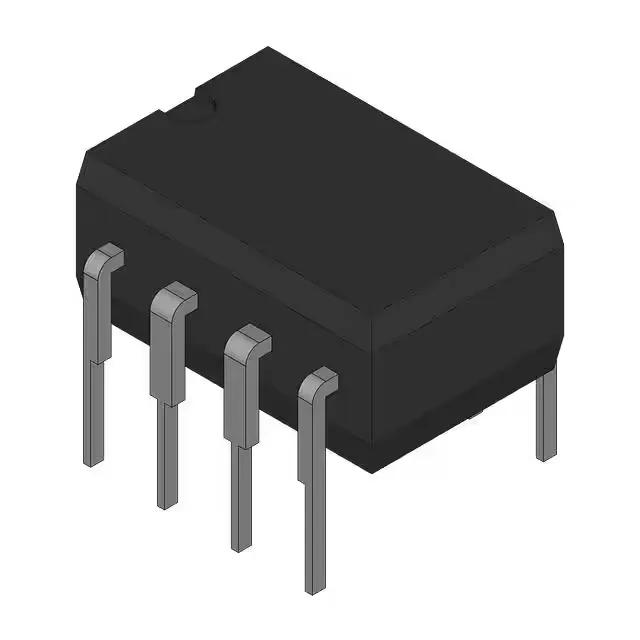
Strobed differential comparator for industrial threshold detection
The Texas Instruments LM211P is a single-element, strobed differential comparator in a through-hole 8-DIP package. It accepts a wide supply range from 3.5 V to 30 V single supply or ±1.75 V to ±15 V dual supplies, making it suitable for mixed-voltage industrial control boards, motor-drive feedback circuits, and factory automation threshold detectors. The output stage supports DTL, MOS, open-collector, open-emitter, RTL, and TTL logic families, giving the designer flexibility when interfacing to different logic domains.
The 3.5 V to 30 V single-supply window covers 5 V logic rails, 12 V industrial buses, and 24 V panel supplies without an extra regulator. On dual supplies, ±15 V matches standard op-amp rails, so the comparator drops into an existing analog signal chain. The 50 mA typical output current drives a relay coil, an optocoupler LED, or a logic gate input directly — no buffer transistor needed for most loads. Quiescent current maxes at 6 mA, which is modest for a general-purpose comparator but worth budgeting in multi-channel designs.
Input accuracy for threshold detection
For a precision threshold set by a resistor divider, 3 mV of offset translates to about 0.02% of a 15 V reference — more than adequate for overvoltage/undervoltage lockout, zero-crossing detectors, and window comparators in industrial temperature ranges. The strobe input lets the designer gate the comparison, useful for sampled-data systems or multiplexed analog inputs.
Package and environment
ROHS3 compliance avoids restriction-related redesigns.