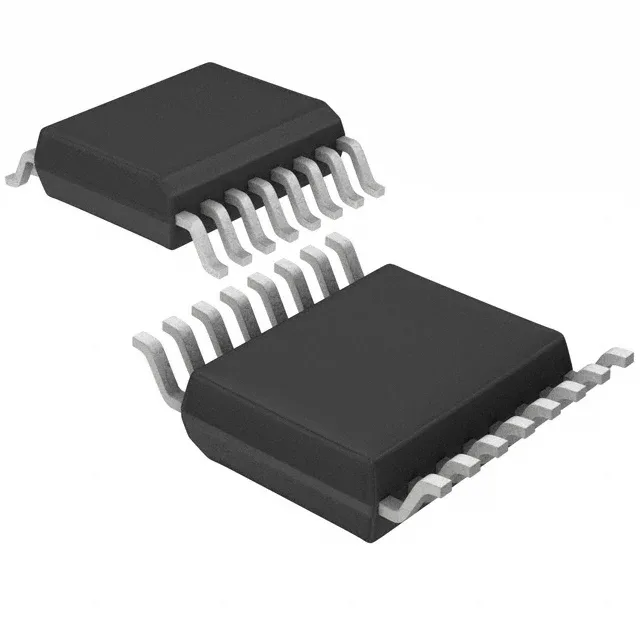
Texas Instruments ISO7762QDBQRQ1 — Digital Isolators

TI ISO7762QDBQRQ1 CAN Isolator, 100 Mbps, AEC-Q100, 16-SSOP

MPNISO7762QDBQRQ1
Active

Texas Instruments ISO7762QDBQRQ1, Automotive AEC-Q100, CAN, Capacitive Coupling, 6-Channel Unidirectional Digital Isolator, 100Mbps Data Rate, 3000Vrms Isolation, 2.25V~5.5V Supply, -40°C~125°C, 16-SSOP Package.

$4.3700Ref. price · indicative, final on quote
StockContact for availability
MOQ1 pcs
  • 100% new & originalTraceable channels only — no refurbs, no pulls, no remarked parts.
  • Date & lot codes on quoteStated per line before you commit; label photos on request.
  • MSL-compliant ESD packingMoisture-sealed bags with indicator cards; reels photo-verified.
  • PayPal buyer protectionPay by T/T, PayPal or Payoneer — card payments covered end to end.

Specifications

ISO7762QDBQRQ1 Technical Specifications
ParameterValue
TypeCAN
SeriesAutomotive, AEC-Q100
Channel typeUnidirectional
Mounting typeSurface Mount
Voltage2.25V ~ 5.5V
Voltage - isolation3000Vrms
Isolated powerNo
Operating temperature-40°C~125°C
Pulse width distortion4.9ns
PackageTape & Reel (TR); Cut Tape (CT)
Data rate100Mbps
TechnologyCapacitive Coupling
Case16-SSOP (0.154\", 3.90mm Width)
Number of channels6
Inputs - side 1/Side 24/2
Rise (Fall time)1.1ns, 1.4ns
Propagation delay tpLH (tpHL)16ns, 16ns
Common mode transient immunity85kV/µs

Product details

Six-channel CAN isolator with AEC-Q100 grade for automotive and industrial bus isolation

The Texas Instruments ISO7762QDBQRQ1 is a six-channel, unidirectional digital isolator built on capacitive-coupling technology, designed for CAN bus isolation and other high-speed serial interfaces in automotive and industrial environments. It carries AEC-Q100 qualification, making it suitable for under-hood and chassis-domain applications where reliability screening is required. The part provides 3000 Vrms galvanic isolation with a 100 Mbps data rate, supporting CAN FD and other fast serial protocols without bottlenecking the bus.

The 100 Mbps data rate gives headroom for CAN FD at 5 Mbps or even 10 Mbps without timing pressure. Propagation delay is 16 ns max in both directions, which keeps the bus turnaround tight — important for arbitration in multi-node CAN networks. Common-mode transient immunity of 85 kV/µs minimum means this isolator handles the fast voltage swings from motor-drive inverters or solenoid switching without corrupting the data. Pulse-width distortion is held to 4.9 ns max, preserving signal symmetry through the isolation barrier. The 3000 Vrms isolation rating is the basic insulation level for automotive and industrial systems; it provides margin for 48 V or 400 V battery stacks when used in a reinforced insulation scheme with proper creepage on the PCB. The 1.1 ns typical rise and 1.4 ns fall times are fast enough for 100 Mbps but still controlled enough to avoid excessive EMI with a short trace.

Supply rails and decoupling for the SSOP-16

A 0.1 µF ceramic cap close to each supply pin (pins 1 and 16) is sufficient for decoupling; the capacitive-coupling architecture doesn't draw large transient currents like an optocoupler would. The 16-SSOP package has a 0.154-inch (3.90 mm) body width with 0.0256-inch (0.65 mm) pitch — standard for hand assembly with a fine-tip iron. No exposed thermal pad, so dissipation is through the leads only; at 125°C ambient, keep the total package dissipation under about 150 mW.

Frequently asked questions

Is ISO7762QDBQRQ1 compatible with 3.3V systems?

Yes, the supply voltage range of 2.25 V to 5.5 V covers 3.3 V operation directly, so no level shifter is needed when interfacing with a 3.3 V CAN transceiver or MCU.

What is the typical application of ISO7762QDBQRQ1?

This isolator is designed for galvanic isolation of CAN bus lines in automotive ECUs, battery management systems, motor drives, and industrial automation where high common-mode transient immunity and 100 Mbps data rate are required.

What are the alternatives to ISO7762QDBQRQ1?

Within the same ISO7762 family, the base part number ISO7762 (non-automotive grade) offers the same six-channel, 100 Mbps isolation without AEC-Q100 qualification. For a pin-compatible automotive-grade alternative, check the ISO7762FQDBQRQ1 variant with different fail-safe output states.