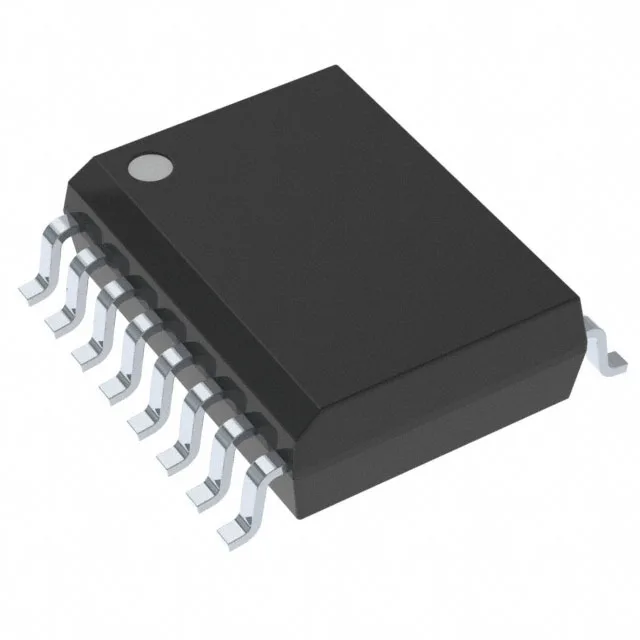
What this 3-channel isolator brings to the board
It packs three unidirectional channels in a 16-SOIC package, configured with two inputs on side 1 and one input on side 2 — the typical layout for isolating an SPI bus (clock and data out forward, data in reverse) or splitting a control signal path. The supply range from 2.25V to 5.5V lets it work across 3.3V and 5V logic domains without a level shifter.
The 5000Vrms isolation voltage is the spec that qualifies this part for reinforced insulation in mains-connected equipment — think motor drives, industrial power supplies, and grid-tied inverters where a fault on the high-voltage side must not reach the control logic. The 85kV/µs common-mode transient immunity is the companion spec that matters when the isolator straddles a noisy switching node: fast voltage transients from a SiC or IGBT half-bridge can couple across a weak barrier and flip a data bit. At 85kV/µs, this part handles the edge rates you see in modern power stages without needing external filtering on every channel.
No commercial-grade plastic part handles that range — this one does, in a standard 16-SOIC footprint that rework techs can swap with a hot-air station and tweezers.