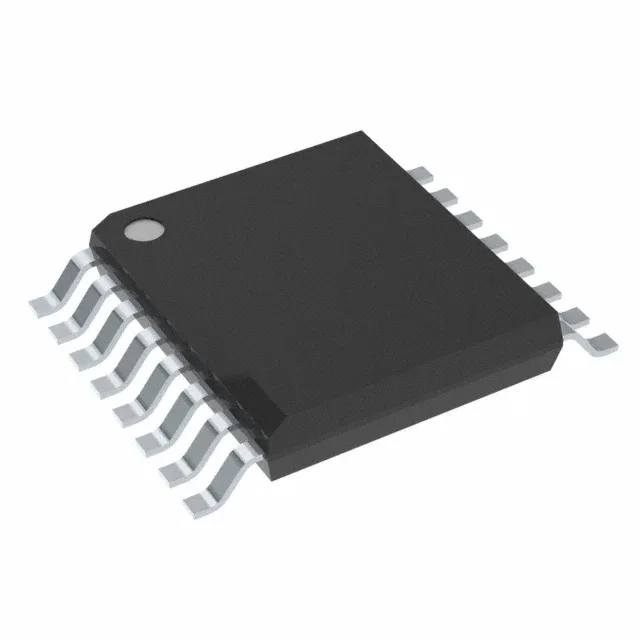
Texas Instruments ISO7731DBQ — Digital Isolators

TI ISO7731DBQ digital isolator, 100Mbps, 3000Vrms, 16-SSOP

MPNISO7731DBQ
Active

Texas Instruments ISO7731DBQ general-purpose digital isolator, capacitive coupling, 3 unidirectional channels, 100Mbps data rate, 3000Vrms isolation, 16-SSOP package, -55 to 125°C operating temperature.

$3.0300Ref. price · indicative, final on quote
StockContact for availability
MOQ1 pcs
  • 100% new & originalTraceable channels only — no refurbs, no pulls, no remarked parts.
  • Date & lot codes on quoteStated per line before you commit; label photos on request.
  • MSL-compliant ESD packingMoisture-sealed bags with indicator cards; reels photo-verified.
  • PayPal buyer protectionPay by T/T, PayPal or Payoneer — card payments covered end to end.

Specifications

ISO7731DBQ Technical Specifications
ParameterValue
TypeGeneral Purpose
Channel typeUnidirectional
Mounting typeSurface Mount
Voltage2.25V ~ 5.5V
Voltage - isolation3000Vrms
Isolated powerNo
Operating temperature-55°C~125°C
Pulse width distortion4.9ns
PackageTube
Data rate100Mbps
TechnologyCapacitive Coupling
Case16-SSOP (0.154\", 3.90mm Width)
Number of channels3
Inputs - side 1/Side 22/1
Rise (Fall time)1.3ns, 1.4ns
Propagation delay tpLH (tpHL)16ns, 16ns
Common mode transient immunity85kV/µs

Product details

What the ISO7731DBQ does on your board

The TI ISO7731DBQ is a three-channel digital isolator using capacitive coupling to pass digital signals across a galvanic isolation barrier. It delivers 100Mbps per channel with 16ns propagation delay and 4.9ns pulse-width distortion, which keeps timing margin clean for SPI, UART, and general-purpose logic isolation. The 3000Vrms isolation rating covers reinforced insulation requirements for industrial fieldbus, motor-drive feedback, and medical patient-interface separation. With 85kV/µs common-mode transient immunity, it handles the fast voltage slew rates in inverter and switching power supply environments without bit errors.

Three channels, two directions — routing the isolation barrier

The channel configuration is 2 inputs on side 1, 1 input on side 2 — all unidirectional. That maps cleanly to isolating a 2-wire SPI bus (SCLK, MOSI from the controller) plus a single feedback signal (MISO from the peripheral), or to breaking ground loops on three discrete control lines. The 2.25V to 5.5V supply range on each side lets you level-shift between 2.5V, 3.3V, and 5V domains without external translation. The 1.3ns typical rise/fall time preserves signal integrity at 100Mbps, but the fast edges also mean the PCB layout needs controlled impedance traces if the isolation channel runs more than a few centimetres.

The 16-SSOP package (3.90mm body width) fits compact multi-channel isolation modules without consuming excessive board area. No isolated power on-chip — you supply separate isolated rails on each side, which is the typical approach for discrete isolators in distributed systems.

Active lifecycle — no LTB concern

TI lists the ISO7731DBQ as Active. That means no last-time-buy risk for production programs currently qualifying it, and no pressure to redesign for a drop-in replacement. The base product number ISO7731 covers a family of channel-direction variants in the same 16-SSOP footprint, so if a design later needs a different channel mix (e.g., ISO7730DBQ with 3/0 direction), the PCB layout stays the same.

Frequently asked questions

Does ISO7731DBQ replace ISO7221?

The ISO7221 is an older dual-channel isolator with different channel direction and lower data rate. The ISO7731DBQ is not a direct pin-compatible replacement — the pinout and channel count differ. For a drop-in replacement, check the ISO7731 family's pin-compatible variants or consult the TI cross-reference guide for the specific ISO7221 package option.

What is the difference between ISO7731DBQ and ISO7730DBQ?

The ISO7731DBQ has a 2/1 channel direction (two inputs on side 1, one on side 2). The ISO7730DBQ has all three channels oriented in the same direction (3/0). Choose based on whether you need a reverse-direction channel across the barrier.