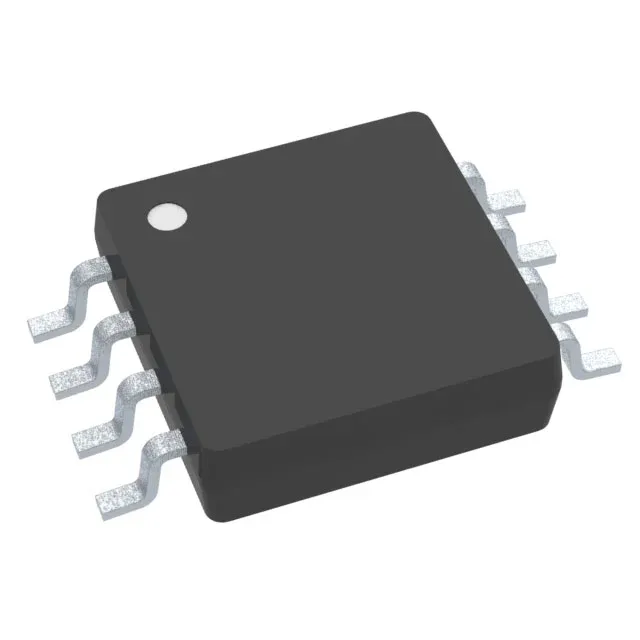
The INA310A2IDGKR is a single-channel current sense amplifier from TI's Zero-Drift series, built to measure current through a shunt resistor on high-side or low-side rails up to 110 V common-mode. Its 1.3 MHz bandwidth and 2.5 V/µs slew rate let it track fast current edges in PWM-driven loads like motor windings or solenoid valves without significant phase lag. The 2.7 V to 20 V supply span means it can run directly from a 3.3 V MCU rail, a 5 V logic supply, or a 12 V/24 V industrial bus — no extra regulator needed.
Bandwidth, offset, and drive capability
The 1.3 MHz -3 dB bandwidth is roughly 4× wider than the 350 kHz of the INA254A1IPWAR, making the INA310A2IDGKR a better fit for applications that need to capture sub-microsecond current spikes — think overcurrent detection in fast-switching DC-DC converters or BLDC motor commutation events. Input offset voltage is trimmed to 15 µV typical, a direct benefit of the Zero-Drift architecture. At a 1 mΩ shunt, that offset translates to 15 mA of apparent current error — negligible for most 10 A+ loads, but worth noting if you're measuring standby currents below 100 mA. Supply current is 1.6 mA typical, low enough to be powered from a GPIO pin if the MCU can source that much. The single-ended output drives directly into an ADC input without a buffer.
Package, rework, and lifecycle
It comes in an 8-VSSOP package — a 3.00 mm × 3.00 mm body, 0.65 mm pitch. The small footprint saves board space, and the exposed pad (if present on the VSSOP variant) helps thermal transfer to the PCB copper. The part is small enough that the pad copper area under the package matters more than the package itself for heat sinking.
Active lifecycle means no end-of-life risk for ongoing production. Request a quote for the quantity you need — we confirm current pricing and lead time per RFQ.