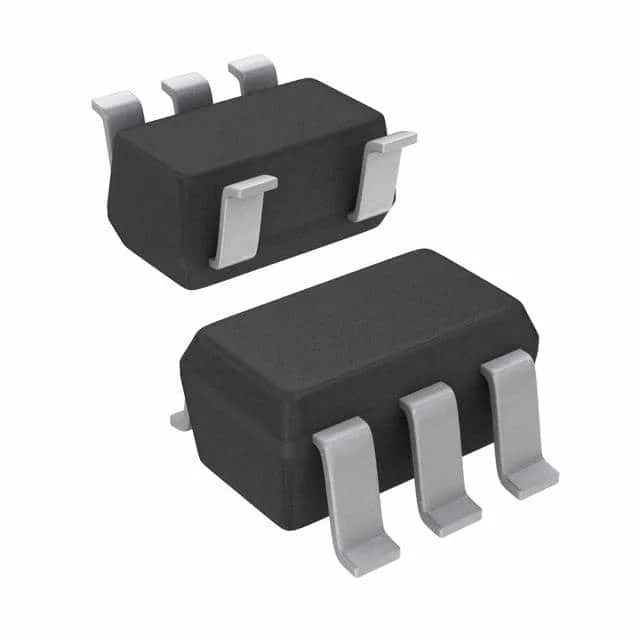
Texas Instruments INA293B5IDBVT — Logic ICs

TI INA293B5IDBVT Current Sense Amplifier, 900 kHz, SOT-23-5

MPNINA293B5IDBVT
End of Life

Texas Instruments INA293B5IDBVT, Current Sense Amplifier, 1 Circuit, 900 kHz -3dB Bandwidth, 2.5V/µs Slew Rate, 2.7V to 20V Supply, SOT-23-5, -40°C to 125°C.

$3.72Ref. price · indicative, final on quote
PackagingSC-74A, SOT-753
StockContact for availability
MOQ1 pcs
  • 100% new & originalTraceable channels only — no refurbs, no pulls, no remarked parts.
  • Date & lot codes on quoteStated per line before you commit; label photos on request.
  • MSL-compliant ESD packingMoisture-sealed bags with indicator cards; reels photo-verified.
  • PayPal buyer protectionPay by T/T, PayPal or Payoneer — card payments covered end to end.

Specifications

INA293B5IDBVT Technical Specifications
ParameterValue
Mounting typeSurface Mount
Amplifier typeCurrent Sense
Voltage - input offset2 µV
Voltage - supply span2.7 V
Current - supply1.5mA
Current - input bias20 µA
Operating temperature-40°C ~ 125°C
-3db bandwidth900 kHz
PackageTape & Reel (TR); Cut Tape (CT)
Slew rate2.5V/µs
CaseSC-74A, SOT-753
Number of circuits1

Product details

Precision current sense in a hand-reworkable SOT-23-5

That 900 kHz -3dB bandwidth and 2.5 V/µs slew rate mean it can track current waveforms in switching converters running at a few hundred kilohertz, not just DC rail monitoring.

2 µV offset — what it means for shunt selection

With a 2 µV input offset voltage, the dominant error term in a low-side sense circuit shifts from the amplifier to the shunt resistor's tolerance and TCR. For a 50 A load through a 1 mΩ shunt, the 50 mV sense signal sees a 0.004% offset contribution — negligible. Even at 1 A through 10 mΩ (10 mV sense), the offset adds only 0.02% error. This lets you use a smaller shunt value to reduce power dissipation, or skip a trim pot in production. The 20 µA input bias current flows into the shunt, adding a small voltage drop that matters only with very high shunt resistances — at 100 mΩ it adds 2 µV, doubling the offset, so keep shunt values under 50 mΩ for precision work.

900 kHz bandwidth — switching-frequency fit

The 900 kHz -3dB bandwidth and 2.5 V/µs slew rate give this part enough closed-loop response to reproduce current waveforms in buck converters switching at 200-400 kHz with reasonable fidelity. For a 500 kHz switching regulator, expect some amplitude roll-off and phase lag — the output will still show the average and ripple envelope, but the edges will be slewed. The 1.5 mA quiescent supply current is a reasonable trade-off for this bandwidth; if your application only needs DC current monitoring, a lower-bandwidth sense amp would draw less supply current.

The 2.7 V minimum supply means it works in 3.3 V systems with headroom to spare; the 20 V maximum covers 12 V and 24 V industrial buses directly. No separate LDO needed for the sense amp rail if the bus is within that range. ROHS3 compliant per the listing, so it passes EU material restrictions as-is.

Frequently asked questions

Can INA293B5IDBVT be used in a 3.3V system?

Yes. The minimum supply voltage is 2.7 V, so a 3.3 V rail provides 0.6 V of headroom above dropout. The input common-mode range and output swing are specified for 2.7 V to 20 V operation, so 3.3 V is well within the normal operating range.

Is INA293B5IDBVT RoHS compliant?

Yes, it is listed as ROHS3 compliant, meaning it meets the EU RoHS directive including the exemption for lead in certain applications.

What is the bandwidth of the INA293B5IDBVT?

The -3dB bandwidth is 900 kHz, with a slew rate of 2.5 V/µs. This combination supports accurate current measurement in switching converters operating up to a few hundred kilohertz.

Is the INA293B5IDBVT obsolete?

No, the product status is listed as Active. There is no indication of discontinuation or last-time-buy. It remains a current-production part suitable for new designs.