3 µV offset — what it buys the current-sense design
With a 900 kHz bandwidth and a 2 V/µs slew rate, it can track load transients on a switching regulator output or monitor motor current ripple. Supply range runs from 2.7 V to 20 V, covering common 3.3 V, 5 V, and 12 V rails without an extra regulator.
The wide temperature range also covers engine-bay electronics and factory-floor sensor interfaces where ambient heat is a given.
Supply current and input bias — the power budget
Quiescent supply current is 370 µA, low enough for battery-powered monitoring loops. Input bias current is 20 µA — typical for a current-sense amplifier with internal gain-setting resistors; it flows through the shunt and adds a small offset, so factor it into the error budget at very low shunt values.
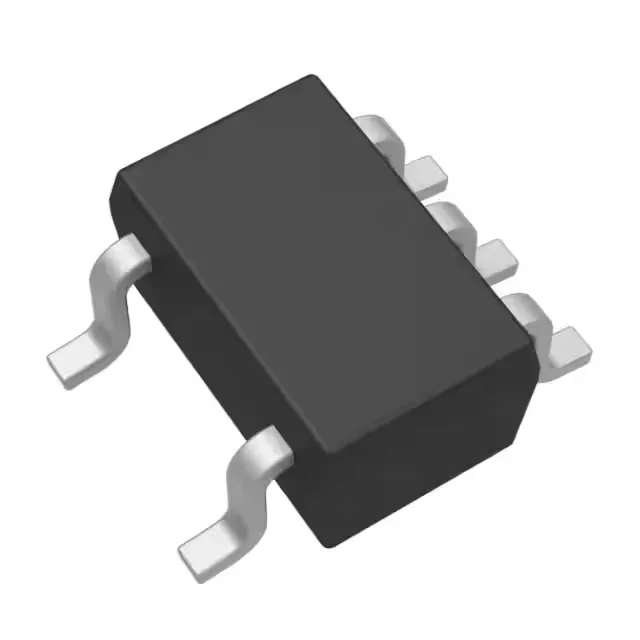
Housed in an SC-70-5, a 5-pin surface-mount package with 0.65 mm pitch. The same footprint covers the 5-TSSOP and SOT-353 variants listed in the case options. Board space is minimal — roughly 2.0 mm × 2.1 mm — so it fits dense power-management sections.