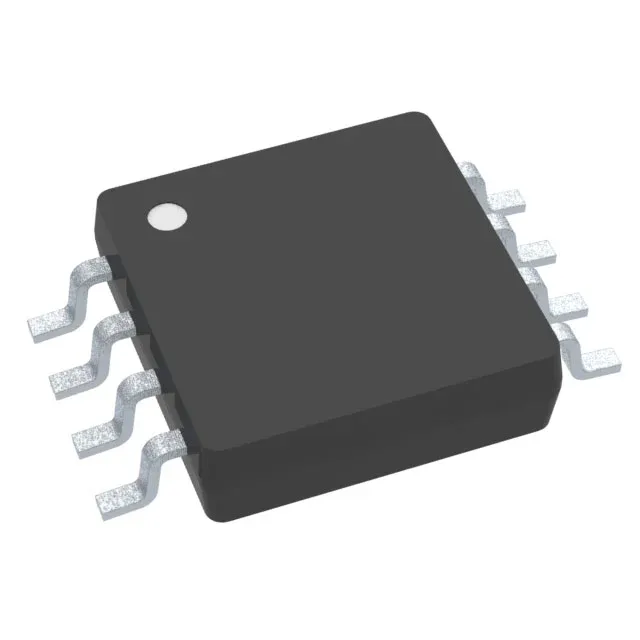
What this current-sense amplifier brings to a shunt measurement
It integrates two independent amplifiers in a single 8-VSSOP package, saving board area compared to using two single-channel parts. Each channel delivers a rail-to-rail output, making it straightforward to interface with an ADC or comparator without an extra level-shift stage.
Key parametric decisions for the BOM
The 350 kHz bandwidth and 2V/µs slew rate are fast enough for DC rail monitoring and moderate-speed overcurrent detection, but not for high-frequency switching transients — the INA2180A1IDGKT is a fit for steady-state and average-current sensing, not for capturing sub-microsecond fault events. Input offset voltage is rated at 100 µV, which translates to a typical measurement error of 0.1% on a 100 mV shunt drop — acceptable for most power-rail monitoring but worth derating if the shunt voltage is below 10 mV. Input bias current is 80 µA, so the shunt resistor value should be kept low enough that the bias current doesn't introduce a significant voltage drop error.
It is ROHS3 compliant.