Precision current sensing with Zero-Drift architecture
The INA190A3IRSWT: Its key differentiator is the chopper-stabilized Zero-Drift topology, which holds input offset voltage to a maximum of 2 µV and keeps drift negligible over temperature — critical for sub-milliohm shunt measurements where even a few microvolts of offset translates to a significant current error.
Bandwidth and slew rate — matching the signal to the measurement
The gain-bandwidth product is 35 kHz and the -3 dB bandwidth is 20 kHz, with a slew rate of 0.25 V/µs. That bandwidth suits DC and low-frequency AC current monitoring — think motor winding current, battery charge/discharge profiles, or power-supply output monitoring. It is not meant for fast-switching waveforms like those from a high-frequency buck converter; for that, a current-sense amplifier with a 350 kHz bandwidth (such as the INA254A1IPWAR in the same Zero-Drift family) would be the better fit, though at the cost of higher supply current.
Temperature range and package — industrial and automotive readiness
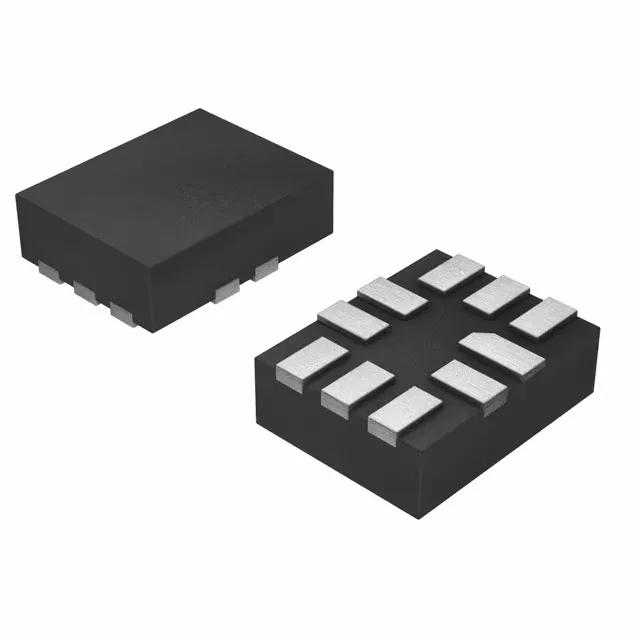
The 10-UFQFN package (1.8 mm x 1.4 mm body) is a compact, leadless package suited for space-constrained PCBs. The supplier device package is 10-UQFN (1.8x1.4).