Zero-drift current sense — why the 2 µV offset matters
The INA190A2IRSWR is a zero-drift current sense amplifier from Texas Instruments, designed to measure voltage across a shunt resistor with minimal error. Its 2 µV input offset voltage and 500 pA input bias current let it resolve microvolt-level drops accurately, which is the difference between a clean current reading and a noisy one in precision motor-drive or battery-monitoring loops. The 37 kHz bandwidth and 0.25 V/µs slew rate suit it for DC-to-low-frequency AC sensing — think solenoid current, heater load, or battery charge/discharge profiles — not high-speed switching transients.
Supply range and temperature — where it fits
Rail-to-rail output keeps the dynamic range usable even at low supply voltages, which matters when the ADC reference is the same rail.
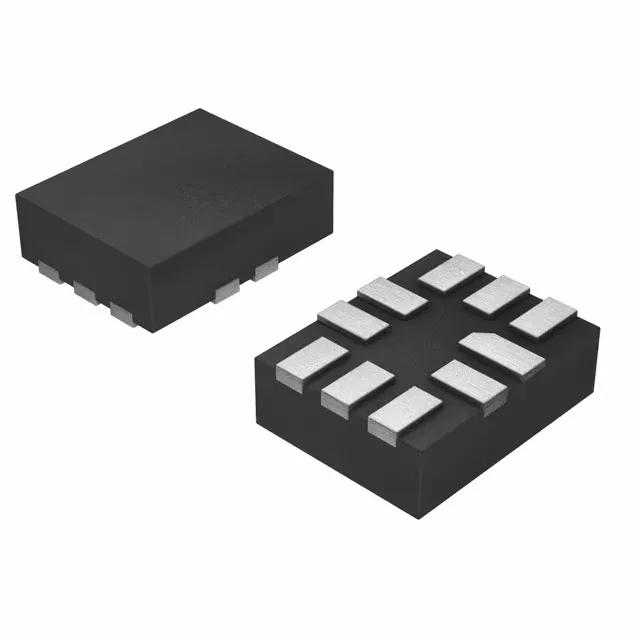
Housed in a 10-UFQFN with supplier package 10-UQFN (1.8x1.4 mm), it is a surface-mount device for compact layouts. The small footprint suits dense mixed-signal boards where every mm² counts, but the fine-pitch pads need a well-tuned stencil and reflow profile — MSL 3 handling applies per the class.