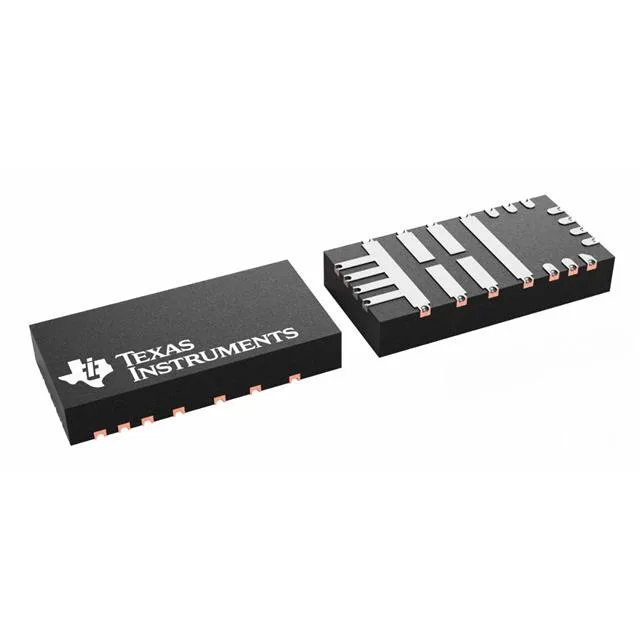
46 A half-bridge for 12 V / 24 V automotive loads
The Texas Instruments DRV8145SQRXZRQ1 is a fully integrated half-bridge driver rated for brushed DC and bipolar stepper motors in automotive environments. It delivers up to 46 A continuous output from a supply range of 4.5 V to 35 V, covering 12 V and 24 V vehicle electrical systems.
The 46 A continuous output current places this driver in the high-current tier for a half-bridge IC. The datasheet's SOA curves (not reproduced here) will show the current derating above 85°C ambient; at 125°C the usable current is lower than the 25°C rating. For a brushed DC motor driving a 12 V starter or a 24 V hydraulic pump, the headroom at lower temperatures gives margin, but the thermal design of the PCB land pattern is the limiting factor for sustained high-current operation.
Supply voltage range: 4.5 V to 35 V
The 4.5 V to 35 V supply and load voltage range is wide enough to cover automotive 12 V (nominal 13.8 V, load-dump to 35 V) and 24 V (nominal 28 V, transient to 35 V) systems. The 35 V absolute maximum matches the typical automotive load-dump clamp level for 12 V systems; for 24 V systems the margin above the nominal 28 V is only 7 V, so a transient suppressor on the supply rail is recommended if the vehicle bus can exceed 35 V during jump-start or double-battery conditions. The 4.5 V minimum ensures operation during cold-crank down to 4.5 V, which is below the typical 6 V automotive cold-crank floor.
PWM and SPI control interface
The driver accepts both PWM and SPI commands. PWM input allows direct duty-cycle control from an ECU or motor controller without a serial link, while SPI provides register-based configuration of current limits, slew rate, fault reporting, and diagnostic readback. For designs that need real-time current regulation or multi-axis coordination, the SPI interface reduces pin count versus parallel logic. The Bi-CMOS process keeps the logic supply current low even at high switching frequencies.
Automotive-grade reliability and lifecycle
It is AEC-Q100 qualified per the Automotive grade designation, which is the standard for stress-tested components used in safety- and reliability-critical vehicle systems. The ROHS3 compliance covers the latest restriction exemptions.