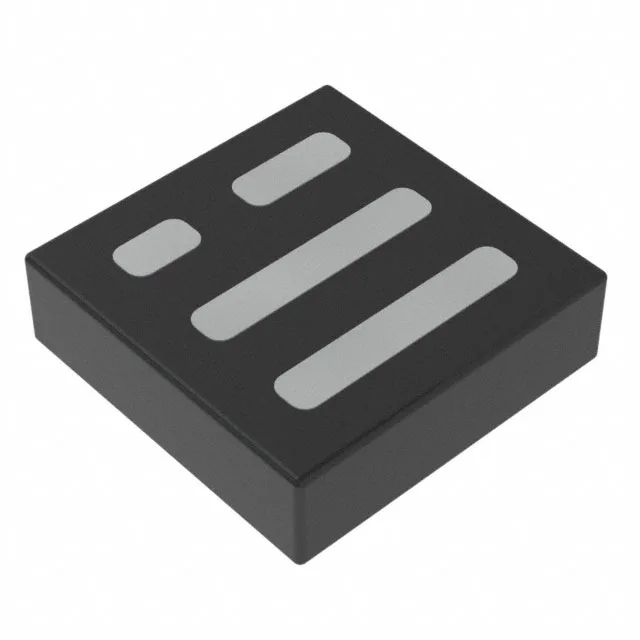
P-channel load switch for tight spaces
The Texas Instruments CSD22205L is a P-channel NexFET power MOSFET in a 4-PICOSTAR package — a 4-pin XFLGA land-grid array that sits nearly flush on the board.
9.9 mOhm Rds(on) — what it buys you
Maximum on-resistance is 9.9 mOhm at 4.5 V gate drive with 1 A drain current. That low Rds(on) keeps conduction losses under 100 mW at 3 A — critical in a package that can only shed 600 mW at ambient. The drive voltage window is 1.5 V minimum for the highest Rds(on) tier, 4.5 V for the lowest; a 3.3 V logic-level gate drive lands between those points, so expect slightly higher than the 9.9 mOhm floor if the gate driver rail is 3.3 V.
8.5 nC gate charge — switching speed matters
Total gate charge at 4.5 V is 8.5 nC, and input capacitance at 4 V drain-source is 1390 pF. A modest 1 A gate driver can turn this FET on in under 10 ns; the real switching loss is in the output capacitance discharge, not the gate drive. For a 500 kHz to 1 MHz switching regulator, the gate-drive power penalty is small — roughly 40 µW per MHz of switching frequency.
Thermal reality in a 4-PICOSTAR package
The 4-PICOSTAR land-grid array measures roughly 1 mm × 1 mm — no exposed pad, no thermal slug. Maximum power dissipation is 600 mW at 25°C ambient, derated above that. The 7.4 A current rating is achievable only with aggressive PCB copper spreading and low duty-cycle pulsed operation; at DC the thermal limit kicks in well below that figure.
Active, ROHS3, and what that means for BOM planning
The NexFET series is an ongoing TI portfolio — second-source risk is low.