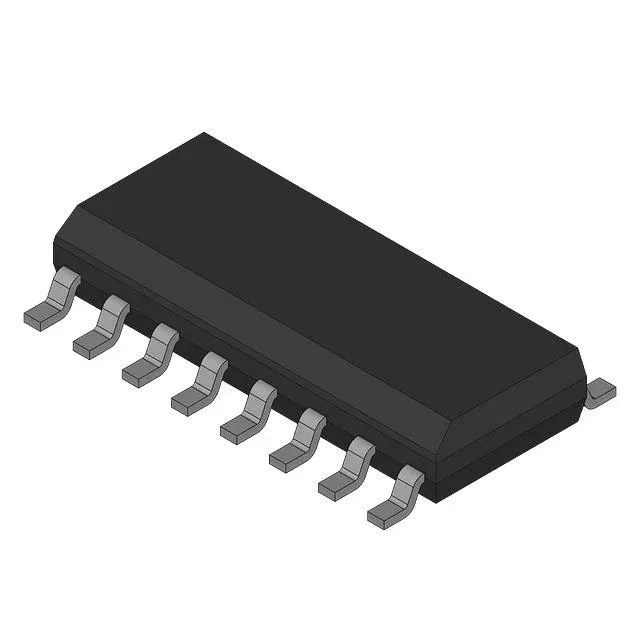
What the CDC328DBR does on the board
The CDC328DBR is a low skew clock driver from Texas Instruments, designed to distribute a clock signal to multiple loads with minimal timing mismatch between outputs. It takes one input and fans it out to several outputs, preserving edge alignment so that downstream devices — ADCs, FPGAs, or synchronous logic — see the clock edges at nearly the same instant. This part is typically used on digital PCBs where clock distribution must be clean and balanced, such as telecom line cards, base stations, or high-speed data converters.
The key specification here is low skew — the part is characterized to keep output-to-output propagation delay differences small. That matters when you are distributing a high-frequency clock to multiple receivers: a few hundred picoseconds of skew can eat into setup-and-hold margins on a fast bus. The CDC328DBR is not a high-frequency PLL or jitter cleaner; it is a straight fanout buffer. If your design needs differential outputs (LVPECL, LVDS) or a 2:1 mux input, the CDCLVP1204RGTR is a different architecture — same fanout function but with LVPECL outputs and a wider supply range.