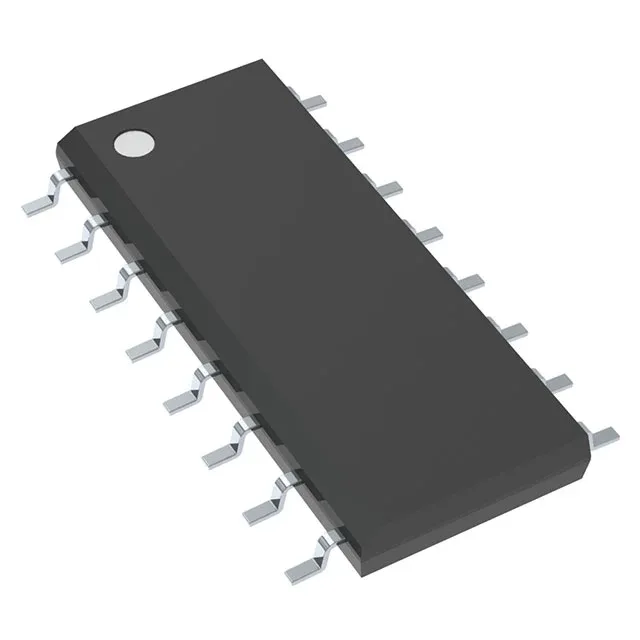
Texas Instruments CD74HCT390M96 — DC-DC Power Modules

CD74HCT390M96 Dual Decade Ripple Counter, 27 MHz, SOIC-16

MPNCD74HCT390M96
End of Life

Texas Instruments 74HCT series, CD74HCT390M96, dual decade ripple counter, 27 MHz count rate, asynchronous reset, negative-edge triggered, 4.5 V to 5.5 V supply, -55°C to 125°C, 16-SOIC.

$0.72Ref. price · indicative, final on quote
Packaging16-SOIC (0.154", 3.90mm Width)
StockContact for availability
MOQ1 pcs
  • 100% new & originalTraceable channels only — no refurbs, no pulls, no remarked parts.
  • Date & lot codes on quoteStated per line before you commit; label photos on request.
  • MSL-compliant ESD packingMoisture-sealed bags with indicator cards; reels photo-verified.
  • PayPal buyer protectionPay by T/T, PayPal or Payoneer — card payments covered end to end.

Specifications

CD74HCT390M96 Technical Specifications
ParameterValue
Series74HCT
Logic typeCounter, Decade
Trigger typeNegative Edge
Mounting typeSurface Mount
Voltage4.5 V ~ 5.5 V
Operating temperature-55°C ~ 125°C
ResetAsynchronous
PackageTape & Reel (TR); Cut Tape (CT)
DirectionUp
Count rate27 MHz
Case16-SOIC (0.154\", 3.90mm Width)
Number of elements2
Number of bits per element4

Product details

Dual decade ripple counter for frequency division and event counting

The Texas Instruments CD74HCT390M96 is a dual decade ripple counter from the 74HCT logic family. Each of the two independent counters divides by ten, triggered on the negative edge of the clock input. The asynchronous reset forces all outputs low immediately, independent of the clock state, which is useful for power-on initialization or fault recovery in timing chains. Rated for a maximum count rate of 27 MHz, the part handles frequency division up to the low-MHz range — suitable for dividing a 27 MHz reference clock down to 2.7 MHz, 270 kHz, and so on. The supply range of 4.5 V to 5.5 V aligns with standard 5 V TTL/CMOS rails, and the operating temperature range of -55°C to 125°C qualifies it for military, avionics, and downhole instrumentation where the board sees extreme thermal cycling. Housed in a 16-pin SOIC package (3.90 mm body width), the CD74HCT390M96 is a surface-mount part suited for automated assembly. The 74HCT series provides LSTTL-compatible input thresholds with CMOS output swing, so it can directly drive standard 74HCT or 74LS loads without level translation.

Count rate and reset — what they mean for the timing budget

The 27 MHz count rate is the maximum clock frequency at which the counter reliably increments. In a frequency divider chain, this sets the upper bound on the input clock. The asynchronous reset (active-high) clears all four bits of each counter without waiting for a clock edge, which guarantees a known state at power-up or after a reset pulse — no dead cycles. Because the counter is ripple-through, the propagation delay from clock to the most significant bit is the sum of the delays through each stage. For timing closure, budget the worst-case propagation delay from the datasheet when cascading counters or sampling the output synchronously.

Active lifecycle — no LTB risk for new designs

The CD74HCT390M96 carries an Active product status, meaning Texas Instruments continues to manufacture it without a planned end-of-life date. ROHS3 compliance covers the current EU exemption regime, so it can be specified into new designs without a waiver.

Sourcing and availability

As an active, widely-used 74HCT logic part, the CD74HCT390M96 is stocked by multiple independent distributors. The part is sourced to order through our supply chain, with no minimum order quantity restrictions typical of broker channels.

Frequently asked questions

What is the difference between CD74HCT390 and CD74HCT393?

The CD74HCT390 is a dual decade counter (divide-by-10 per section), while the CD74HCT393 is a dual 4-bit binary counter (divide-by-16 per section). Both are asynchronous (ripple) counters with negative-edge triggering and the same 27 MHz count rate, but the division ratio differs: the 390 divides by 10, the 393 by 16. Choose the 390 for decimal counting or BCD applications; choose the 393 for binary division or modulo-16 counting.

Can CD74HCT390M96 be used as a frequency divider?

Yes. Each of the two decade counters divides the input clock frequency by ten. For example, a 27 MHz clock applied to the clock input produces a 2.7 MHz output at the most significant bit (Q3). Cascading both counters yields a divide-by-100. The asynchronous reset allows gating or synchronizing the divider chain.