What the 74HCT family buys you on a 5V bus
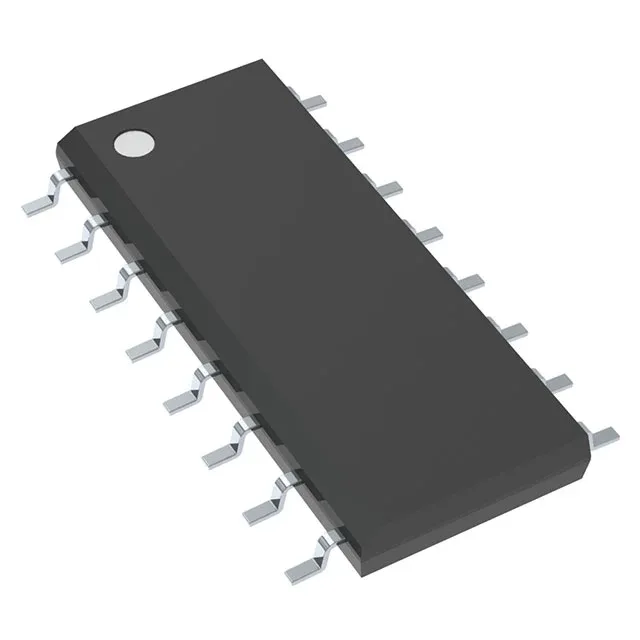
Its TTL-compatible input thresholds let it replace legacy 74LS or 74S buffers without re-terminating the bus — the HCT family accepts TTL levels while running on a standard 5V CMOS supply. Two elements are provided: one 2-bit buffer and one 4-bit (hex) buffer, giving you a 6-bit total width in a single 16-SOIC package.
Military temperature range – not just a marketing checkbox
That matters for avionics, satellite bus interfaces, downhole instrumentation, or any environment where the board sees thermal cycling from cold soak to hot engine bay. The 4mA output drive (source and sink) is modest — expect about 10 LSTTL fan-out per output — but adequate for control signals, address decoding, or local buffering on a shared bus.
3-state outputs and bus sharing
The 3-state output architecture lets multiple CD74HCT367MT devices or other 3-state buffers share a common data bus without contention. When the output enable is deasserted, the outputs go high-impedance, allowing another driver to take control. This is standard for multiplexed address/data lines, memory I/O, or any bidirectional bus where you need to isolate the buffer from the line when it is not selected.
It is also ROHS3 compliant.