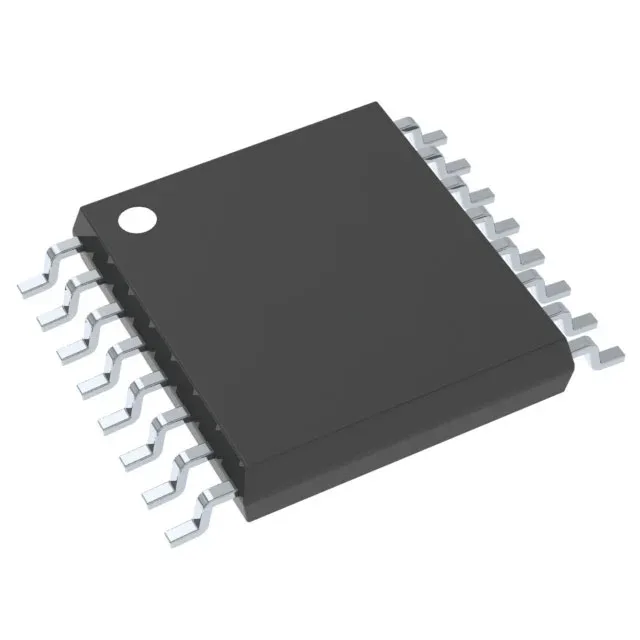
Texas Instruments CD4051BPWRG4 — Analog & Data Acquisition

CD4051BPWRG4 8:1 Multiplexer/Demux, 16-TSSOP, 240 Ohm Ron

MPNCD4051BPWRG4
End of Life

Texas Instruments CD4051BPWRG4, single 8:1 CMOS analog multiplexer/demultiplexer, 240 Ohm max on-resistance, 20 MHz bandwidth, ±2.5V to 9V dual or 3V to 20V single supply, -55 to 125 C, 16-TSSOP package.

$58.8000Ref. price · indicative, final on quote
StockContact for availability
MOQ1 pcs
  • 100% new & originalTraceable channels only — no refurbs, no pulls, no remarked parts.
  • Date & lot codes on quoteStated per line before you commit; label photos on request.
  • MSL-compliant ESD packingMoisture-sealed bags with indicator cards; reels photo-verified.
  • PayPal buyer protectionPay by T/T, PayPal or Payoneer — card payments covered end to end.

Specifications

CD4051BPWRG4 Technical Specifications
ParameterValue
Mounting typeSurface Mount
Voltage - supply, dual (V±)±2.5V ~ 9V
Voltage - supply, single (V+)3V ~ 20V
Current - leakage (IS(off))100nA
Operating temperature-55°C~125°C(TA)
-3db bandwidth20MHz
PackageTape & Reel (TR); Cut Tape (CT)
Case16-TSSOP (0.173\", 4.40mm Width)
Number of circuits1
On-State resistance240Ohm
Multiplexer (Demultiplexer circuit)8:1
Channel capacitance (CS(off), CD(off))0.2pF, 30pF
Channel-to-Channel matching (ΔRon)5Ohm

Product details

8:1 analog multiplexer — signal routing for harsh environments

The CD4051BPWRG4 from Texas Instruments is a single 8:1 CMOS analog multiplexer/demultiplexer, meaning it routes one of eight analog or digital signals to a common output (or vice versa). The 8:1 configuration is the standard building block for data acquisition, sensor scanning, and test equipment channel selection. The 16-TSSOP package keeps the board footprint compact for dense channel cards.

The 240 Ohm maximum on-state resistance (Ron) sets the insertion loss for the analog path. In a 10 kOhm load, the Ron adds about 2.3 % attenuation — acceptable for most 8-bit to 10-bit systems, but for precision 12-bit+ designs you'll want to account for the voltage divider effect or buffer the output. The 5 Ohm channel-to-channel matching helps keep gain errors consistent across the multiplexer channels. The 20 MHz -3 dB bandwidth is enough for audio-frequency signals and low-speed data acquisition up to a few MHz. For video or RF switching, the bandwidth and the 30 pF drain capacitance will roll off the signal — this part is best kept in the sub-1 MHz analog or digital multiplexing space.

Supply flexibility — single or dual rails

The CD4051BPWRG4 operates from either a single supply (3 V to 20 V) or dual supplies (±2.5 V to ±9 V). Dual supplies let you switch bipolar signals (e.g., ±5 V audio) without level-shifting. The single-supply range covers standard 5 V and 12 V logic and analog rails commonly found in industrial PLCs and sensor interfaces.

There is no announced last-time-buy or obsolescence notice.

Frequently asked questions

What is the on-resistance of CD4051BPWRG4?

The maximum on-state resistance is 240 Ohms, with channel-to-channel matching of 5 Ohms. The Ron is specified at room temperature; expect it to increase at the 125°C end of the operating range.

Can CD4051BPWRG4 be used for audio signal switching?

Yes, the 20 MHz bandwidth and 240 Ohm Ron are adequate for line-level audio routing (20 Hz to 20 kHz). The 100 nA max off-leakage current will not introduce audible noise in most designs. For balanced or low-impedance audio, consider buffering the output.

What are the alternatives to CD4051BPWRG4?

The CD4051 family has multiple package and temperature variants (e.g., CD4051B in PDIP, SOIC, or TSSOP). For a pin-compatible drop-in, the CD4051BPWR (non-G4) shares the same 16-TSSOP footprint and specifications; the G4 suffix indicates lead-free / RoHS compliance, which is now standard across the family.