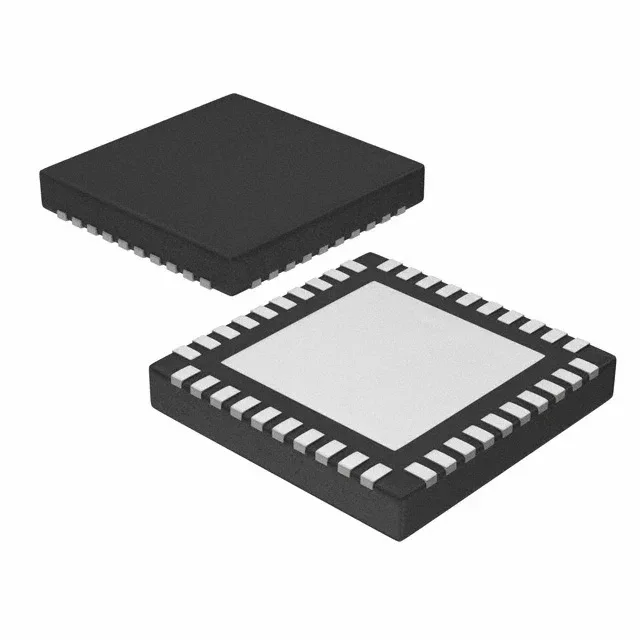
Texas Instruments CC2541F256TRHARQ1 — RF & Wireless ICs

CC2541F256TRHARQ1 Texas Instruments Bluetooth 4.0 SoC

MPNCC2541F256TRHARQ1
Active

Texas Instruments CC2541F256TRHARQ1, Automotive AEC-Q100 Bluetooth 4.0 TxRx + MCU, 256kB Flash, 8kB RAM, -94dBm sensitivity, 0dBm output, 2Mbps data rate, 23 GPIO, I²C/SPI/USART, -40°C~105°C, 40-VQFN (6x6).

$4.5360Ref. price · indicative, final on quote
StockContact for availability
MOQ1 pcs
  • 100% new & originalTraceable channels only — no refurbs, no pulls, no remarked parts.
  • Date & lot codes on quoteStated per line before you commit; label photos on request.
  • MSL-compliant ESD packingMoisture-sealed bags with indicator cards; reels photo-verified.
  • PayPal buyer protectionPay by T/T, PayPal or Payoneer — card payments covered end to end.

Specifications

CC2541F256TRHARQ1 Technical Specifications
ParameterValue
TypeTxRx + MCU
SeriesAutomotive, AEC-Q100
Mounting typeSurface Mount
RF familyBluetooth
Voltage2V ~ 3.6V
Current - receiving18.3mA ~ 20.8mA
Current - transmitting17.2mA ~ 18.6mA
Power - output0dBm
Frequency2.4GHz
ProtocolBluetooth v4.0
InterfaceI²C, SPI, USART
Operating temperature-40°C~105°C
GPIO23
PackageTape & Reel (TR); Cut Tape (CT)
ModulationGFSK, MSK
Memory size256kB Flash, 8kB RAM
Sensitivity-94dBm
Case40-VFQFN Exposed Pad
Data rate2Mbps

Product details

Automotive Bluetooth 4.0 SoC with integrated MCU — the AEC-Q100 differentiator

The Texas Instruments CC2541F256TRHARQ1 is a single-chip Bluetooth 4.0 transceiver with an integrated 8051-compatible MCU, purpose-built for automotive applications.

RF link budget and data rate — what the sensitivity and output power mean for range

With a -94 dBm receiver sensitivity and 0 dBm transmit output power, this part delivers a link budget around 94 dB — enough for reliable communication across a vehicle cabin or between body modules at typical automotive distances. The 2 Mbps maximum data rate supports Bluetooth 4.0's enhanced data rate (EDR) for faster firmware updates or sensor data streaming. Modulation options include GFSK and MSK, covering both basic rate and EDR modes.

Supply range and current consumption — sizing the power rail

Receive current sits between 18.3 mA and 20.8 mA; transmit current ranges from 17.2 mA to 18.6 mA. These numbers are tight enough that a 150 mA LDO can supply the chip plus a few external sensors without headroom issues.

GPIO and serial interfaces — peripheral integration without an external MCU

Twenty-three GPIOs and I²C, SPI, and USART serial interfaces mean this SoC can directly manage sensors, actuators, and displays without a separate host microcontroller. For a typical automotive BLE sensor module — temperature, pressure, or door-lock status — the CC2541F256TRHARQ1 handles the radio stack and the application logic in one package, saving board space and BOM cost.

Package and footprint — 40-VQFN with exposed pad

The supplier device package is 40-VQFN (6x6).

Frequently asked questions

What is the difference between CC2541F256TRHARQ1 and CC2541F256RHAR?

The CC2541F256RHAR is the standard commercial-grade version without AEC-Q100 certification and typically has a narrower temperature range. The suffix 'Q1' denotes automotive qualification. Both share the same 256 KB Flash, 8 KB RAM, Bluetooth 4.0 protocol, and 40-VQFN package, so they are pin-compatible — but only the Q1 variant should be used in automotive applications requiring AEC-Q100 compliance.

Does CC2541F256TRHARQ1 support Bluetooth 4.0 or 4.2?

The CC2541F256TRHARQ1 supports Bluetooth v4.0, not Bluetooth 4.2. It implements the Bluetooth 4.0 low-energy (BLE) specification with GFSK and MSK modulation at data rates up to 2 Mbps. For designs requiring Bluetooth 4.2 features such as extended data length or LE Secure Connections, a different device from the CC254x family or a newer generation would be needed.