AEC-Q100 and the automotive temperature envelope
The AEC-Q100 qualification is the gate for any tier-1 automotive BOM. It means the device has passed the stress tests for high-temperature operating life, temperature cycling, and ESD robustness that commercial-grade parts skip. For a battery monitor that sits near the pack, that temperature margin matters during charge/discharge thermal transients.
Interface and protection: SPI, UART, and over-temperature
The BQ79612PAPRQ1 supports both SPI and UART interfaces. SPI gives a fast, deterministic register-access path for the host MCU; UART allows daisy-chaining multiple monitors across a single twisted pair, which is common in large automotive packs where you need voltage and temperature data from every cell group. Over-temperature fault protection is a standalone feature — it can trigger a shutdown or alert without waiting for the host to poll. That saves firmware complexity and speeds the safety response.
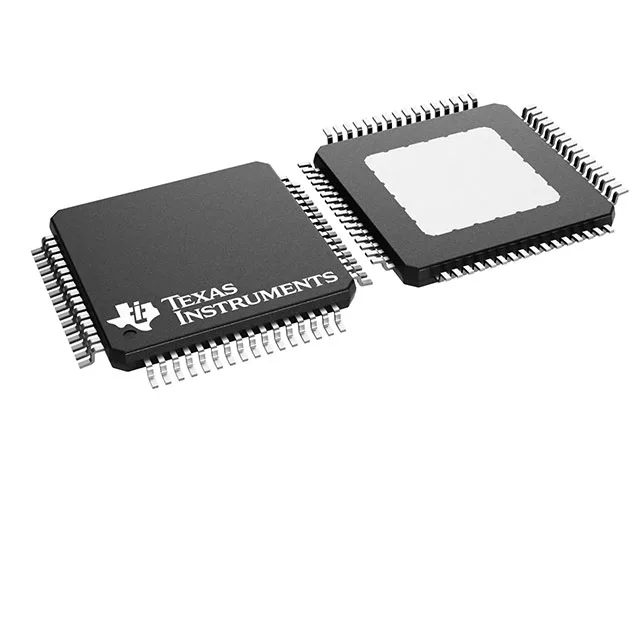
Housed in a 64-PowerTQFP with a 10x10 mm HTQFP footprint. The PowerTQFP variant has an exposed pad for thermal dissipation — important when the monitor is running continuous cell measurements near the pack. Surface-mount assembly is standard; the 64-pin count keeps routing manageable on a four-layer automotive PCB.