Texas Instruments BQ25120F3AYFPR — Power Management (PMIC / Gate Driver)

BQ25120F3AYFPR 1S Li-ion Linear Charger, 20V Input, 300 mA

MPNBQ25120F3AYFPR
Active

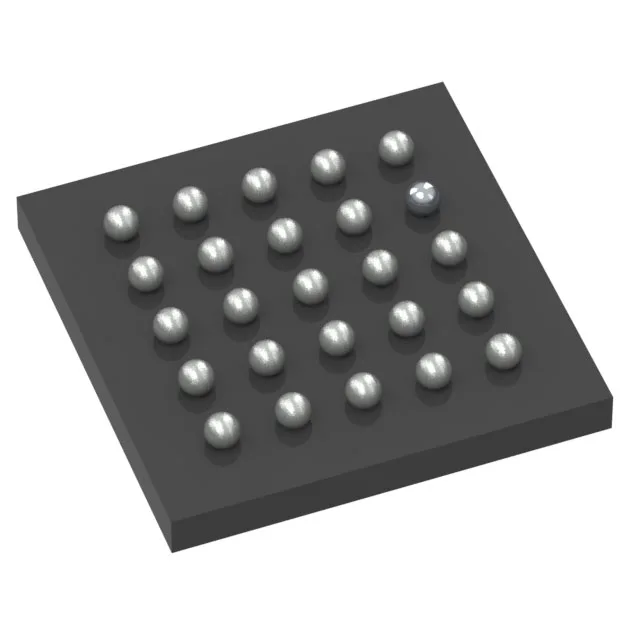
Texas Instruments BQ25120F3AYFPR, 1-cell Li-ion/Polymer linear charger IC, 20V max input, 300 mA programmable charge current, I²C interface, 25-bump DSBGA (2.53x2.47 mm), -40°C to 85°C.

$1.9747Ref. price · indicative, final on quote
StockContact for availability
MOQ1 pcs
  • 100% new & originalTraceable channels only — no refurbs, no pulls, no remarked parts.
  • Date & lot codes on quoteStated per line before you commit; label photos on request.
  • MSL-compliant ESD packingMoisture-sealed bags with indicator cards; reels photo-verified.
  • PayPal buyer protectionPay by T/T, PayPal or Payoneer — card payments covered end to end.

Specifications

BQ25120F3AYFPR Technical Specifications
ParameterValue
Mounting typeSurface Mount
Battery pack voltage4.35V
Voltage20V
Current - chargingConstant - Programmable
Charge current - max300mA
InterfaceI²C
Operating temperature-40°C ~ 85°C (TJ)
PackageTape & Reel (TR)
Case25-XFBGA, DSBGA
Number of cells1
Fault protectionOver Current, Over Temperature, Over Voltage, Short Circuit
Battery chemistryLithium Ion/Polymer
Programmable featuresCurrent, Timer, Voltage

Product details

20V input ceiling — why it matters for a 1S charger

The BQ25120F3AYFPR is a linear charger for a single-cell lithium-ion or lithium-polymer battery that accepts a supply voltage up to 20 V. That 20 V ceiling is the part's defining advantage: it survives USB-C PD negotiation at 9 V or 15 V and tolerates 12 V wall adapters without an external buck pre-regulator, which keeps the BOM count low for a wearable or IoT node.

300 mA charge current — the charge-time floor

The maximum charge current is 300 mA, programmable via I²C. For a 150 mAh TWS earbud battery that means roughly a 30-minute charge from empty; for a 500 mAh smartwatch cell it is closer to 100 minutes. The constant-current profile is set by an external resistor and the I²C register, so the same PCB can support different product tiers by firmware alone.

Fault protection — no separate battery protector needed

Over-voltage, over-current, over-temperature, and short-circuit protection are all integrated. That eliminates the discrete battery-protector IC and its associated passives, saving about 8 mm² of board area in a typical layout. The thermal regulation loop reduces charge current automatically when the die temperature exceeds the internal threshold, so the part does not simply shut down on a hot day — it throttles.

25-bump DSBGA — footprint and reflow reality

The 25-bump DSBGA (2.53 x 2.47 mm) is among the smallest packages for a 1S linear charger at this current level. The 0.4 mm pitch and 0.25 mm solder-ball diameter require a Type 4 or finer solder-paste stencil and a reflow profile matched to the board thickness. X-ray inspection after reflow is recommended to confirm all bumps wetted; a head-in-pillow defect on one bump will float the charge-enable line.

Frequently asked questions

Is BQ25120F3AYFPR compatible with 4.2V lithium ion batteries?

Yes. The battery pack voltage is rated at 4.35 V, which covers the standard 4.2 V Li-ion termination voltage. The I²C-programmable voltage register can be set to 4.2 V, 4.35 V, or other values within the range, so the same IC works with both standard and high-voltage cells.

Does BQ25120F3AYFPR have thermal regulation?

Yes. The fault-protection block includes over-temperature protection, and the charger reduces charge current when the die temperature exceeds the internal threshold, preventing a thermal shutdown during high-ambient or high-current operation.